AMD Stake Sends Marvell Shares Higher
A small disclosed holding refocuses attention on optical interconnects for AI datacenters
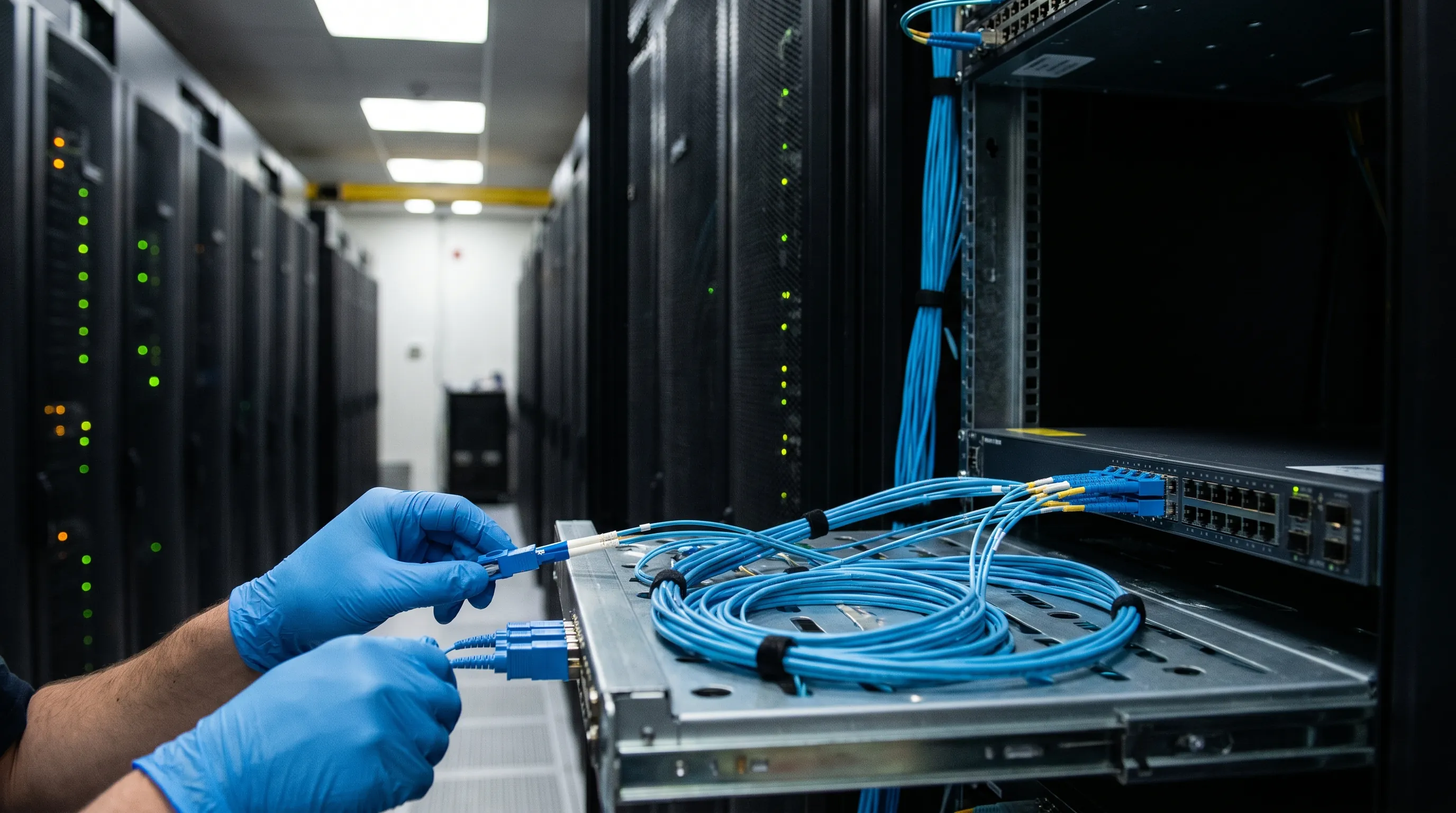
A technician wearing blue gloves connects fiber optic cables to networking hardware in an aisle of data center server racks. © The GPU Trade Inc 2026
Marvell Technology’s stock popped in mid‑May after Advanced Micro Devices disclosed an equity stake in the networking and interconnect chipmaker, sending investors back to questions about optical links for large AI systems.
The disclosure, filed with the SEC, showed AMD owned 65,516 Marvell shares at the end of March — a holding valued at roughly $6.5 million at that time — according to public filings and market reports.
The market reaction was immediate: Marvell shares rose sharply on May 13 as analysts raised forecasts and investors piled into names tied to AI networking and custom silicon. Bank of America lifted its price target on Marvell to $200 from $125 the same week, amplifying the move.
Beyond the headline number, traders and strategists said the significance lies in what the stake implies about downstream hardware plans — not control of the company. AMD’s small, disclosed holding was widely read as a signal that the chip designer may be lining up suppliers or technical partners as AI systems scale and require new datacenter fabrics.
That reading matters because Marvell has pushed hard into optical interconnects and co‑packaged optics, technologies many engineers view as the next bottleneck for multi‑rack AI clusters. The company’s recent product announcements and conference presentations highlight DSPs and optics designed for 200G/lambda and beyond.
Marvell’s optical push has been visible in its dealmaking this year. The company moved to acquire companies building silicon‑photonics and photonic fabrics, and reports this spring said Marvell is active in partnerships that bring optics closer to compute elements. Some outlets have also reported significant external investments and collaborations linking Marvell to major AI infrastructure players.
Engineers and industry commentators note why optics matter: electrical traces struggle with power and signal integrity as chiplets, accelerators, and switches try to talk across racks at ever higher speeds. Optical interconnects promise far higher bandwidth per watt and longer reach, which is crucial when AI clusters grow from single racks to multi‑rack or pod‑level systems.
The AMD filing rekindled those technical debates because an arrangement between a major accelerator designer and an interconnect specialist could shorten integration timelines. Investors therefore read the stake through two lenses: small near‑term financial exposure and a possible strategic foot in the door for deeper engineering collaboration.
It is important to stress the stake’s scale: 65,516 shares is modest and well below ownership levels that trigger Schedule 13D takeover triggers, but it does meet public‑disclosure rules that draw attention in thinly traded strategic suppliers. The filing released in mid‑May simply made visible a position that was held at the end of March.
Analysts who followed the move balanced enthusiasm with caution. Several research notes said Marvell stands to gain if wins convert to ordered hardware and recurring revenue, while others warned that design cycles for co‑packaged optics and datacenter interconnects can be long and technically demanding. Bank of America’s bump to its Marvell target assumed a larger AI networking addressable market through 2030.
Competition is another variable. Industry incumbents and other scale‑up players — including firms backing alternative interconnect standards and large switch vendors — are racing to define hardware and software stacks for AI scale. Any AMD‑Marvell engineering alignment would enter a crowded field that includes proprietary fabrics and consortium efforts.
For investors and datacenter architects the episode is a reminder of how the AI‑scale roadmap is reshaping semiconductor supply chains. Small equity stakes, analyst notes and strategic investments now function as signals that can reprice companies long before contract wins show up in revenue reports; Marvell’s next earnings and order cycles will be watched closely for conversion of partnerships into sales. Marvell is scheduled to report results later in May, giving the market a near‑term test of whether the optimism is justified.