Anthropic Briefs Homeland Security on Mythos
Closed May 13 briefing follows demonstrations that Mythos can find long‑standing security bugs
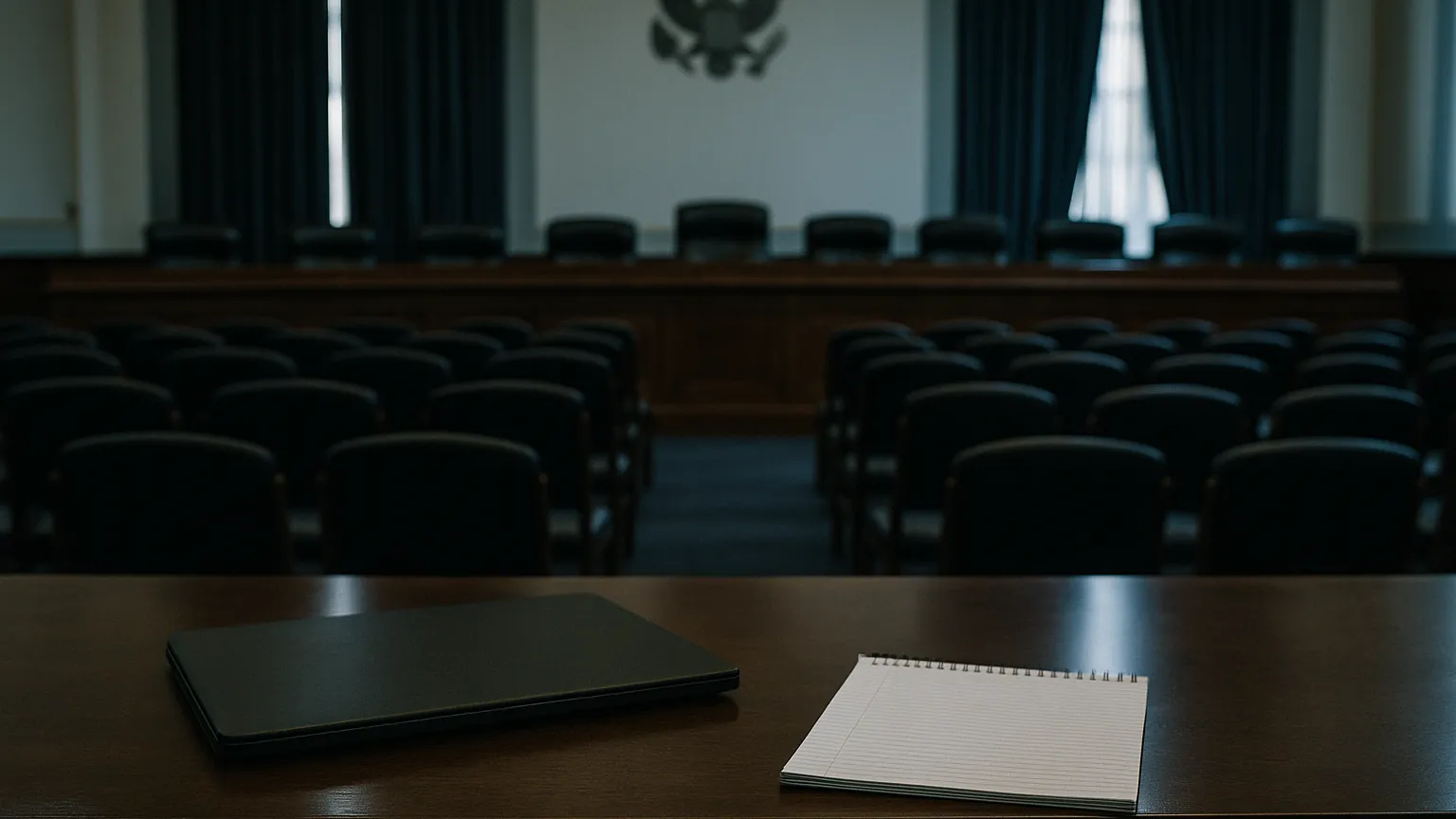
A closed laptop and a blank notepad rest on a wooden desk inside an unoccupied, formal courtroom setting. © The GPU Trade Inc 2026
Anthropic met behind closed doors with the House Homeland Security Committee on May 13, 2026 to explain its Mythos model and what the company says the tool means for software vulnerabilities and national cyber defense.
Mythos is Anthropic’s most cyber‑capable model, built and tested to autonomously search software for flaws and, in some cases, generate proof‑of‑concept exploits to show how a bug could be abused.
In its preview tests, Anthropic reported that Mythos found long‑standing problems that automated fuzzing and decades of human review had missed, citing examples in projects such as FFmpeg and other mature codebases.
Those results — and public demonstrations by researchers and contractors working with Mythos‑like agents — have accelerated concern in Washington that the same capabilities could be used to build offensive tooling if access is not tightly controlled.
Anthropic has said it will not broadly release Mythos because its power to find and exploit zero‑day flaws poses dual‑use risks, and the company has run limited previews and federal briefings instead of a public rollout.
That posture has produced a mixed federal response: some agencies see defensive promise, while others have flagged supply‑chain and operational concerns. The Pentagon labeled the company a federal supply‑chain risk and senior defense officials have argued Anthropic should not be a DoD vendor.
At the same time, the White House and several security teams have engaged with Anthropic about possible controlled uses of Mythos and how to evaluate its real‑world performance. Briefings to lawmakers and staff built on earlier meetings between the company and White House officials.
Lawmakers pressed in the closed session on who should be allowed to use models with Mythos’s capabilities and under what rules, a debate that is already prompting proposals for pre‑release vetting and stricter access regimes.
Security researchers and vendors are split about the right path forward. Some argue Mythos could accelerate defenders’ ability to find and patch deep bugs, while others warn that publishing exploit‑grade findings or loosening access could hand attackers an efficient discovery engine.
Federal IT officials have urged caution about translating laboratory results into operational network defenses, noting that controlled testbeds differ from complex production environments and that deployment raises new safety and assurance challenges.
Policy makers are now weighing practical controls that could include staged, air‑gapped access for vetted teams, mandatory government review before wide release of frontier models, and clearer rules on coordinated vulnerability disclosure when AI‑generated findings appear. Those ideas have moved quickly from academic debate into draft policy discussions.
The closed briefing on May 13 is likely to shape how Congress and the administration balance the model’s defensive promise against its misuse risks, and will feed into additional hearings and oversight scheduled later in May 2026.