ASML Warns Terafab Could Strain Tool Supply
CEO says Musk’s megafab risks tightening an already stretched lithography market
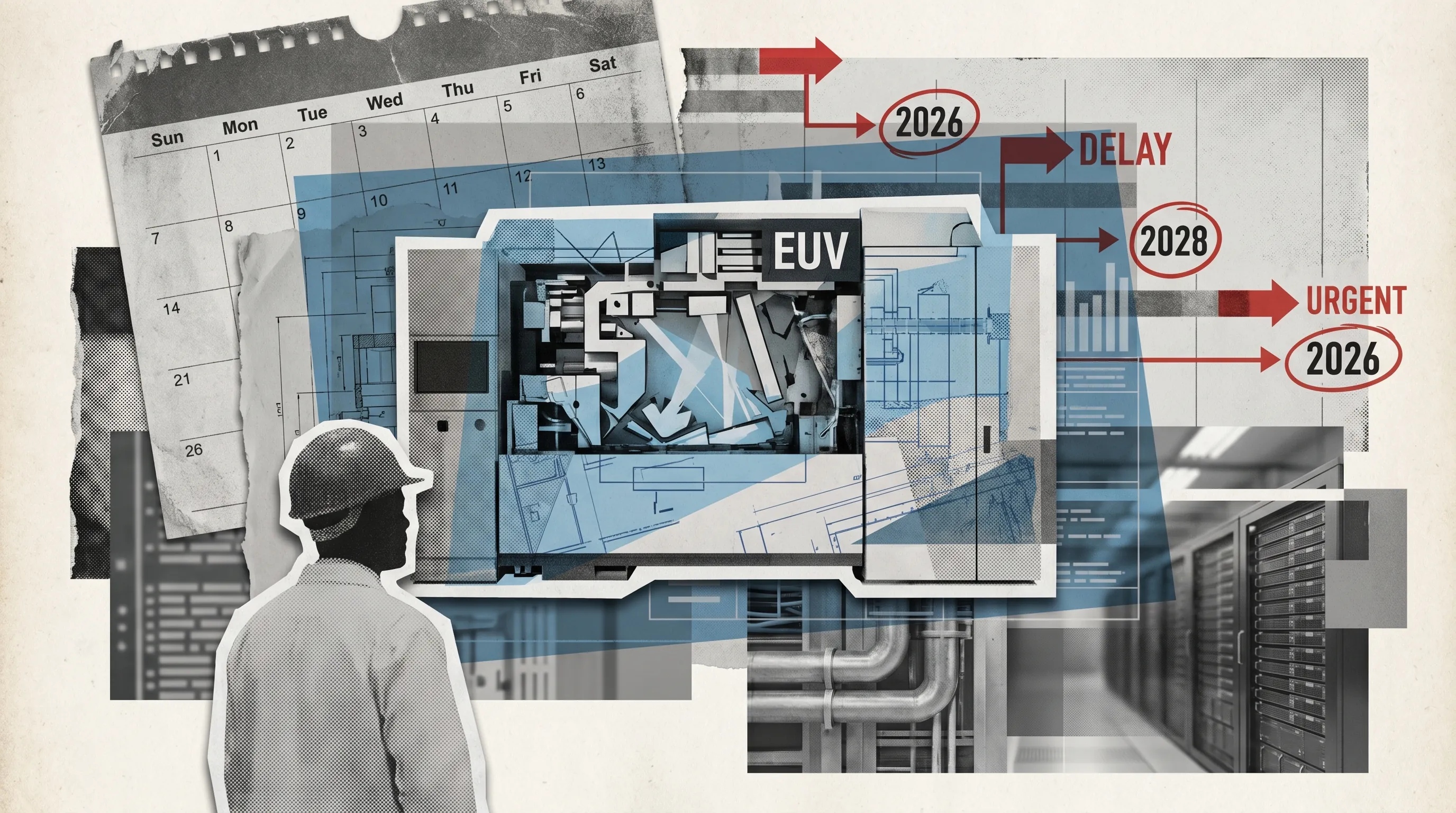
ASML’s chief executive warned this month that Elon Musk’s proposed “Terafab” chip‑making megaproject could tighten supplies of advanced lithography equipment and create knock‑on effects across global chip manufacturing.
Terafab is Musk’s plan for a very large semiconductor manufacturing campus in Texas intended to supply Tesla, SpaceX and other ventures. The project has been described in public reports as a multi‑billion‑dollar effort that would move fast to secure gear and capacity.
ASML sits at the center of that problem: it is the only company that makes extreme‑ultraviolet (EUV) lithography machines required for the most advanced logic and memory nodes. Those systems have long manufacture times and a multi‑year order book, leaving them as a potential gating point for any large fab build.
CEO Christophe Fouquet said direct talks with Musk had taken place and called him “very serious” about Terafab — but added the opportunity only works if ASML can avoid running short of machines. His comments were framed as a caution that big, fast private builds can clash with careful capacity planning by equipment vendors.
The tension is practical. ASML’s EUV systems are high‑complexity, long‑lead items; industry reporting and ASML filings show a record backlog and lead times that stretch many months, sometimes into years. That order book already includes major foundries such as TSMC, Samsung and Intel, which compete for the same constrained production slots.
Reporting also shows Musk’s team has been contacting multiple chip‑equipment suppliers — including Applied Materials, Lam Research and Tokyo Electron — and is willing to pay premiums or seek priority to meet aggressive timelines. Those outreach efforts underscore how Terafab could reallocate scarce tool capacity across vendors and regions.
The prospect has provoked friction inside ASML. Staff at the company have expressed unease about corporate interactions with Musk, with some reports saying employees threatened a boycott of a public event where he might appear. That internal pushback illustrates the reputational and cultural risks vendors face when fast, high‑profile projects request special treatment.
Industry context sharpens the warning. Soaring AI demand has already pushed memory and advanced‑logic capacity tight, and market observers say node‑level and materials bottlenecks could persist for years. When the underlying market is supply‑limited, a single large buyer can magnify scarcity and raise prices for others.
ASML has not been passive. Management has said it plans to ramp EUV production capacity over coming years and is investing in parts and assembly to increase output, while also warning that constraints linked to long‑lead components and supplier capacity remain real. Analysts track targets for dozens more EUV units by 2027 but stress gains will be incremental.
For Terafab the implications are stark: even with deep pockets, building a greenfield advanced fab is not just about money. It takes years to install, qualify and ramp equipment, and critical machines have limited annual production volumes. Industry leaders have publicly cautioned that timelines and yields are hard to accelerate at scale.
That means Terafab could force difficult choices across the supply chain: which customers get priority delivery, when upgrades are scheduled, and how much premium pricing suppliers will accept to re‑order or re‑schedule output. Those choices can cascade into delays for consumer electronics, auto makers and cloud‑AI providers.
Some suppliers and foundries may try to mitigate by diversifying equipment mixes, investing in less advanced nodes for certain workloads, or signing long‑dated supply agreements. But experts say such workarounds are partial and take time; they do not remove the fundamental constraint of very limited EUV throughput today.
ASML’s message — and the broader industry reaction — highlights a simple tension: rapid private fab builds can accelerate domestic chip supply but can also strain a global tool chain built for planned, steady growth. Fouquet’s comments framed Terafab as an “opportunity” only if the vendor community can avoid becoming a bottleneck. The outcome will depend on multi‑year alignment between capital, suppliers and policy.