Best graphics cards 2026: test roundup and AI performance
May 27 roundup weighs gaming, creator and inference tradeoffs for buyers
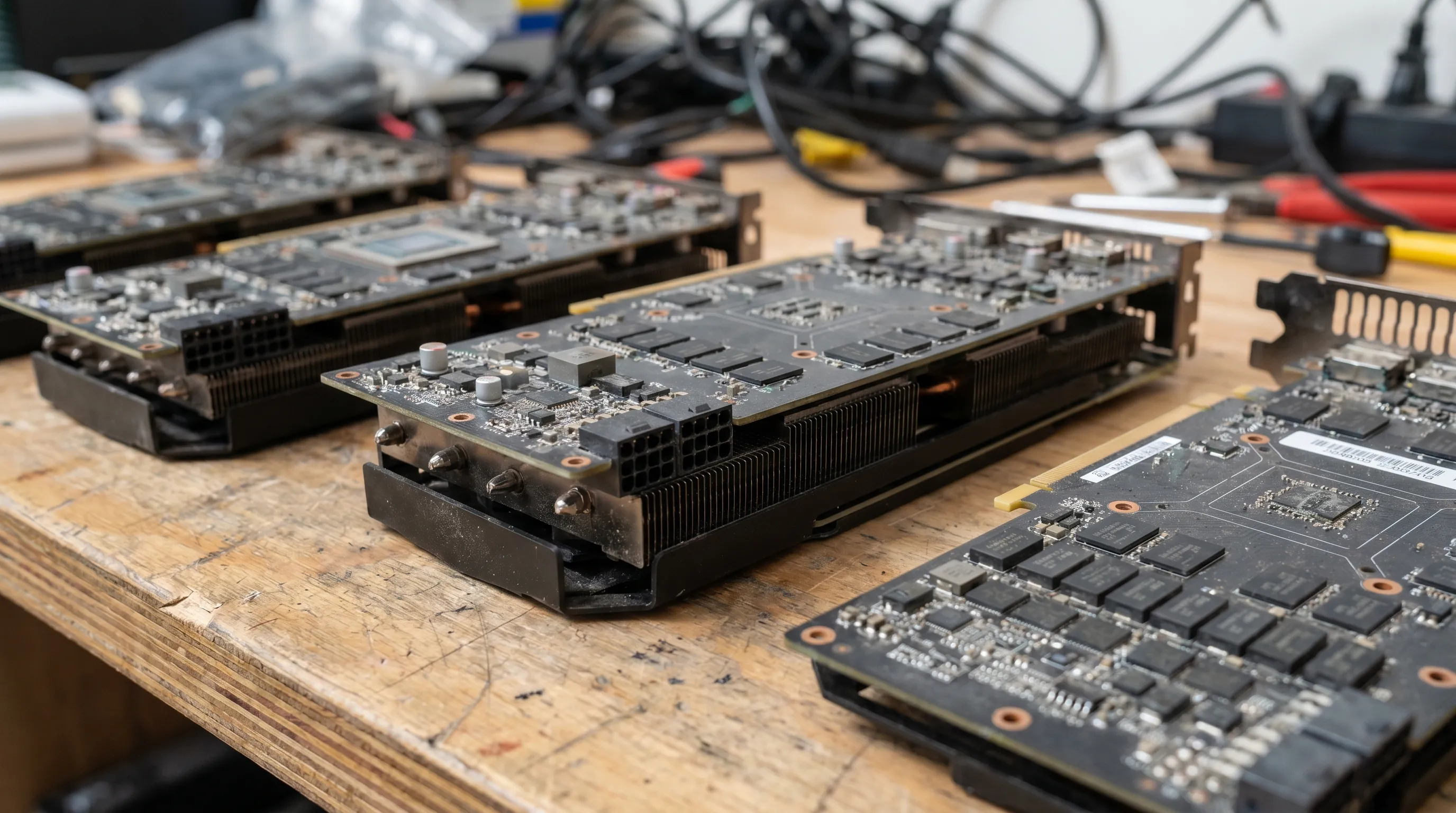
A major consumer roundup published May 27 tests the newest GPUs from AMD, Nvidia and Intel across gaming, content creation and AI tasks to help buyers pick between raw frame rates, creator features and emerging inference performance. The guide mixes benchmark charts with price and memory notes aimed at mainstream buyers.
Tom’s Guide’s May 27 update names the Intel Arc B580 its best overall pick thanks to value at about $249 and solid 1080p–1440p results, while the Nvidia GeForce RTX 5060 Ti (16GB) is a top midrange choice and the AMD Radeon RX 9070 XT leads gaming recommendations. The piece includes a price index and detailed 3DMark averages.
If you’re buying for gaming, the roundup underscores how price-to-performance now matters more than pure peak numbers. Benchmark hierarchies from outlets that test many cards show that upper‑midrange GPUs can narrow the gap with flagship hardware once ray tracing and driver features are considered, so raw TFLOPS aren’t the only metric that matters to gamers.
For creators, the new GeForce RTX 50‑series and recent Radeon SKUs improve image‑processing and export times through broader hardware support for neural upscaling and faster memory. Nvidia’s Blackwell‑based cards bring software and hardware features aimed at creators, while AMD’s RDNA 4 lines emphasize raster and multi‑threaded encode workloads. Those differences show up in real editing and render workloads.
The roundup is also unusually explicit about AI workloads for consumers. Nvidia’s Blackwell family adds FP4/FP8 inference paths and TensorRT optimizations that can multiply local inference throughput on desktop RTX cards, which matters if you run local LLMs or generative models on a single GPU. That software–hardware pairing is a big reason consumer Blackwell cards outperform prior generations for many inference tasks.
Memory type and capacity are central tradeoffs for buyers who also want AI workhorse capability. High‑bandwidth HBM3e remains the best choice for large, low‑latency inference and high‑throughput workloads, but HBM is costly and mostly found on datacenter or workstation accelerators. GDDR7 and upgraded GDDR variants give consumer cards higher practical bandwidth at lower cost, which is why many GeForce and Radeon SKUs stick with GDDR7 or GDDR6X.
That balance affects small ML practitioners. If you plan to run local LLMs without offloading, VRAM ceiling and memory bandwidth limit the model sizes you can serve. Practical guides and community testing show that 16GB of fast GDDR7 helps with many 13–30B parameter models after aggressive quantization, while larger 24–48GB pools or HBM stacks are needed for multi‑modal or 70B+ models without offload. Budget cards with 8–12GB quickly hit practical limits.
Intel and AMD are part of the equation for workstation buyers. Intel’s Arc Pro workstations and newer Arc family parts now offer factory workstation SKUs with larger framebuffers for pro use, while AMD’s server and Pro lines continue to push HBM and high‑capacity designs for big AI tasks. Independent tests of Intel’s higher‑end Arc Pro B70 show meaningful gains over earlier Arc chips in workstation loads.
Practical buying guidance from the May 27 roundup: pick by primary use first. Choose a value or midrange card if you mostly game at 1080p–1440p, an RTX 50‑series or Radeon 9070‑class part for creator contingencies, and reserve HBM‑equipped workstation accelerators for heavy local inference or multi‑GPU server work. The guide’s price index helps map current retail reality against MSRP.
Supply and price pressure remain a backdrop. Memory and wafer capacity have trended toward AI and datacenter demand, lifting prices for high‑speed DRAM and narrowing supply for some consumer SKUs. That dynamic can move value toward well‑priced midrange cards or older generation flagships when street prices diverge from MSRP. Buyers should compare retail listings to the roundup’s price index.
For those focused on inference economics, the industry is bifurcating: expensive HBM stacks and datacenter GPUs deliver the best tokens‑per‑dollar at scale, while cheaper GDDR7‑based inference accelerators and optimized microservers are emerging to handle lower‑latency, lower‑cost contexts. If you’re experimenting locally, a Blackwell GeForce or a GDDR7 inference card may be the most pragmatic pick.
Bottom line: the May 27 roundup is the kind of consumer test that also helps creators and small ML teams. It lays out real measured tradeoffs — FPS, render time, VRAM limits, and memory type — and connects them to price, so shoppers can match a GPU to what they actually do most. Read the full tests and the price index to confirm a card still makes sense at current street pricing.