Broadcom Signs Long-Term Pact to Build Google’s AI Chips Through 2031
Deal ties Broadcom into Google’s TPU roadmap; announced alongside Anthropic compute access expansion
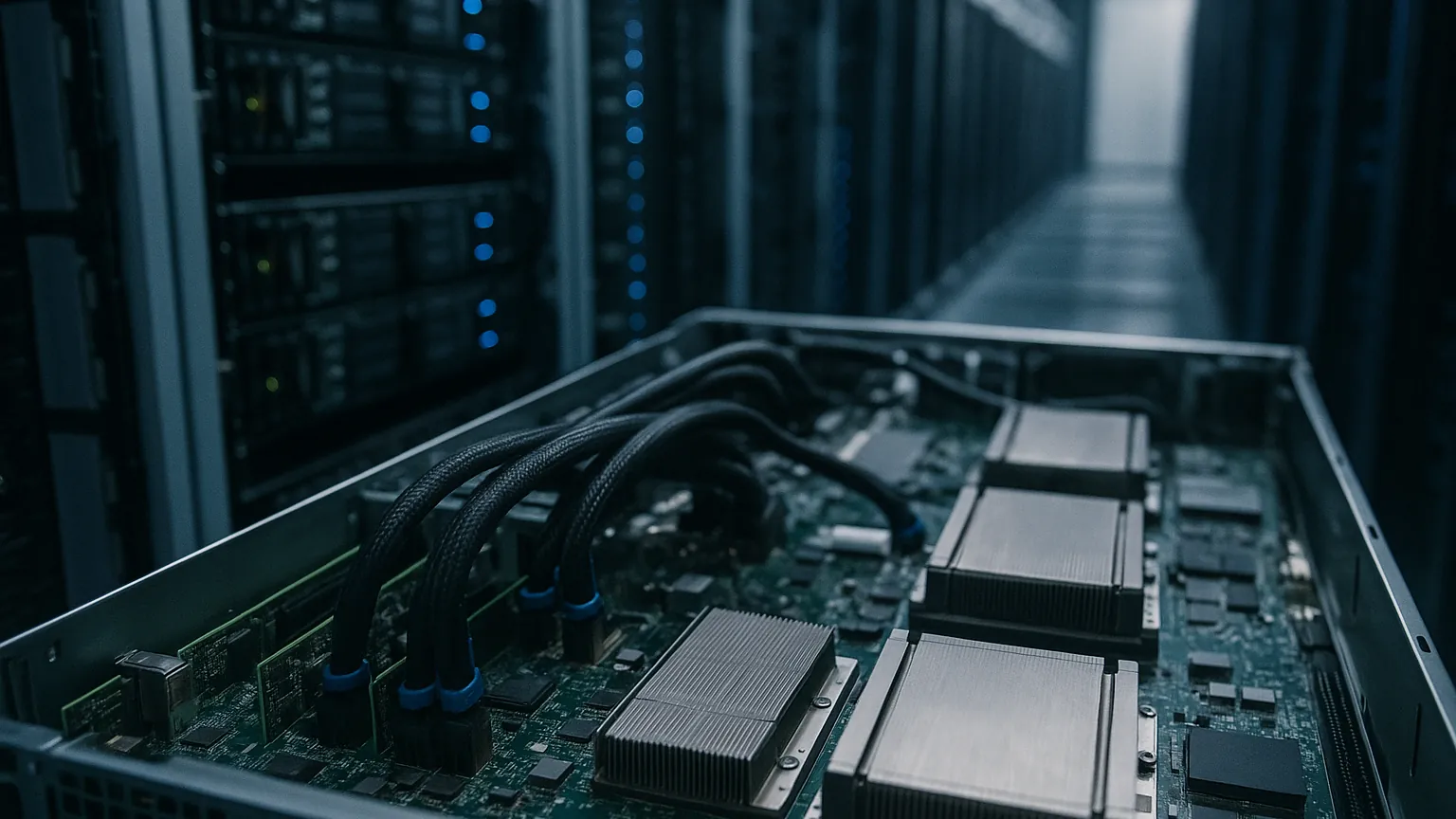
Broadcom disclosed on April 6, 2026 that it has entered a long‑term agreement with Google to develop and supply future generations of the cloud giant’s custom AI processors and to provide networking and other components for next‑generation AI racks through 2031.
The filing and media summaries describe the arrangement as a Long Term Agreement for Broadcom to develop custom tensor processing units (TPUs) for Google, plus a Supply Assurance Agreement so Broadcom will supply networking and rack components used in Google’s AI infrastructure through up to 2031.
The announcement came alongside an expanded three‑party arrangement among Google, Broadcom and Anthropic, under which Anthropic will access multiple gigawatts of next‑generation TPU capacity and, beginning in 2027, roughly 3.5 gigawatts of TPU‑based compute through Broadcom. Anthropic posted details of the expanded partnership on April 6, 2026.
That combination of chip design work and a supply assurance pact binds Broadcom deeper into hyperscaler supply chains at a moment when cloud providers are racing to lock in custom silicon and the associated networking needed for dense AI racks. Analysts and the market view the move as a validation of Broadcom’s strategy to pair ASIC development with data‑center networking.
Technically, Google’s TPU family is a bespoke class of accelerators optimized for large language models and other machine‑learning workloads. Google has iterated TPUs over several generations; the company and industry observers say the chips are designed for energy‑efficient, high‑throughput tensor math inside purpose‑built racks. Custom suppliers like Broadcom translate those designs into manufacturable silicon and the systems that house them.
Market reaction was immediate: Broadcom shares rose in extended trading after the disclosure, with outlets reporting after‑hours gains and analyst notes flagging the size and durability of the new commitments. Investors have been watching Broadcom’s expanding roster of hyperscaler clients for several quarters.
The pact also sharpens supply‑chain dynamics. Hyperscalers need long lead times for wafers, high‑bandwidth memory and optical networking gear to populate dense AI racks, and multi‑year supply agreements help secure capacity and pricing. That said, execution will depend on foundry schedules and component availability over the next several years.
Broadcom’s role has evolved from a networking and component supplier into a major builder of custom AI silicon for cloud customers. The company has already been linked to other large AI partnerships and in recent months positioned AI chip revenue as a core growth pillar. The Google deal further cements Broadcom’s position among a small set of firms that turn hyperscaler chip blueprints into production silicon.
The move also highlights the competitive architecture landscape: Nvidia remains the dominant supplier of general‑purpose GPUs used across many training and inference workloads, while hyperscalers increasingly pair those with custom accelerators such as Google’s TPUs or bespoke ASICs from customers themselves or partners. Broadcom’s deal shows how hardware supply is fragmenting into bespoke ecosystems around major cloud providers.
For Anthropic, the added TPU access is a scale play. The company told customers and investors it is expanding Claude deployments and needs multi‑gigawatt capacity to train and serve larger models; the Google/Broadcom channel gives Anthropic a defined path to that capacity starting in 2027. Observers note this keeps Anthropic diversified across cloud and custom‑chip partners while tying it more closely to Google’s TPU roadmap.
Risks remain. Long‑term supply agreements reduce some uncertainty but introduce execution risk tied to manufacturing yield, component bottlenecks and the calendar timing of rack deployments. Hyperscalers sometimes dual‑source or split orders across suppliers, and competitive responses from Nvidia, AMD and others could reshape timetables and economics. Analysts will be watching Broadcom’s upcoming earnings and SEC filings for revenue recognition and order timing.
In sum, the Broadcom–Google pact announced April 6, 2026 is both a technical and strategic milestone: it locks a major silicon integrator into Google’s TPU program through 2031 and dovetails with Anthropic’s multi‑gigawatt expansion, underscoring how custom chips, networking gear and long supply agreements are now central to the race for AI compute capacity. Markets and industry watchers will look for delivery timetables, foundry milestones and how the deal influences hyperscaler buying patterns over 2026–2027.