Broadcom to Lend Anthropic $42 Billion
IPO filing shows a vendor acting as supplier, lessor and lender in a huge AI compute deal
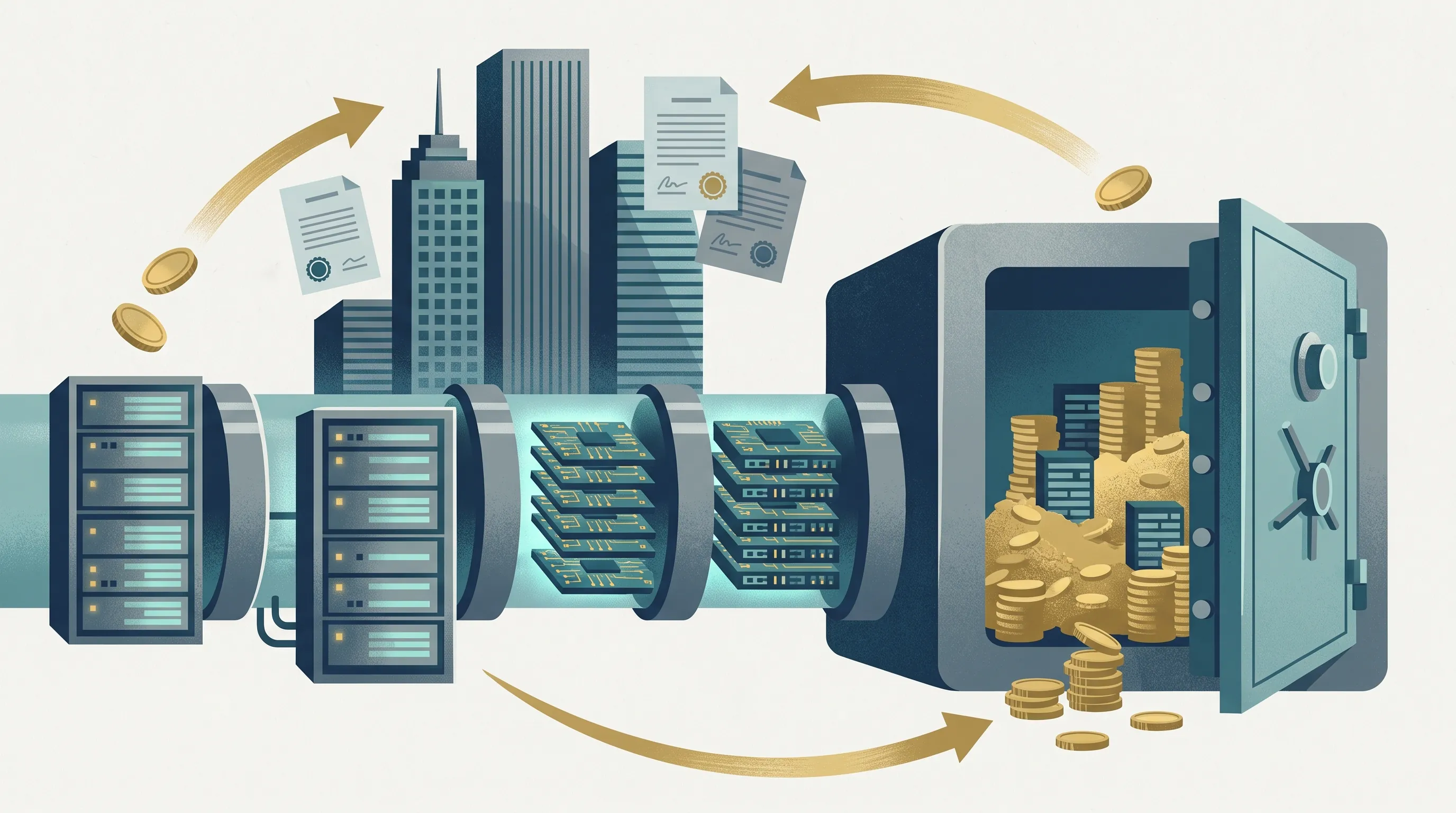
Reuters reported on Oct. 1, 2026 that Anthropic’s IPO prospectus discloses a financing facility under which Broadcom has agreed to lend the AI lab up to $42 billion to help pay for leased chips and related infrastructure.
The arrangement takes the form of convertible debt and sits alongside supply and leasing commitments, making Broadcom simultaneously a supplier, equipment lessor and potential equity holder if conversion occurs.
According to follow-on reporting based on the prospectus, the Broadcom facility would cover roughly one‑third of Anthropic’s stated $125.2 billion, five‑year commitment to lease TPU compute capacity — a scale that underscores how capital‑intensive frontier model training has become.
Anthropic’s filing also flags the risks: certain payment or performance defaults could accelerate lease payments and constrain the company’s ability to use the financing facility to cover those obligations. The prospectus says Anthropic deposited cash in a restricted account for Broadcom’s benefit in April 2026.
On Broadcom’s side, the company’s Sept. 10, 2026 Form 10‑Q describes an AI XPV financing platform and discloses a related backstop that could expose Broadcom to roughly $29 billion of maximum liability as racks are deployed. Broadcom’s filing explains mechanics intended to limit that exposure, but it treats the backstop as a material contingent obligation.
Taken together, the two public filings show how much of this structure was already visible on Broadcom’s books: the convertible‑note ceiling and the lease backstop appear in Broadcom’s quarterly disclosures even where the customer was not named. Analysts and trade press have used the 10‑Q numbers to show how the possible exposure stacks against Broadcom’s cash and debt.
Broadcom has been building an ecosystem of financing partners and investors to underwrite large AI deployments. In June 2026 the company announced an AI financing platform with Apollo and Blackstone to accelerate multi‑gigawatt deployments, a program that the 10‑Q describes as the vehicle behind the backstop and lease arrangements.
Wall Street and legal outlets flagged a second concern: the deal’s circularity. A chip vendor lending money to a customer so the customer can lease the vendor’s chips mixes underwriting, distribution and product demand in ways that can magnify both revenue concentration and counterparty risk. Those questions have driven coverage and quick market commentary.
For AI labs, vendor financing solves an immediate problem: banks and public markets have been reluctant to fund the massive up‑front cost of training capacity. For vendors, financing can lock in long‑term demand and turn hardware into recurring revenue streams, but it also transfers default and resale risk back to the supplier.
The prospectus language and Broadcom’s 10‑Q make clear that these arrangements are not risk‑free. Underwriters, auditors and prospective IPO investors will need to weigh potential conflicts of interest, the terms of conversion, and the contingent liabilities that sit off the balance sheet until drawn or called.
The structure is not entirely unprecedented — vendors and financiers have long devised lease and backstop arrangements for capital‑intensive industries — but the scale here is new. Commentators say the size and opacity of AI lease financing mark a step change in how compute is funded.
What to watch next: whether Anthropic draws on the Broadcom notes, how much of the $42 billion ceiling is actually used, disclosures around conversion pricing, and whether rating agencies or regulators press for more granular transparency. Those developments will affect both Anthropic’s IPO prospects and Broadcom’s credit profile.
In short, the prospectus passage about Broadcom’s $42 billion facility is a signal: frontier AI is entering a phase where suppliers are also capital providers, shifting the balance between vendors, labs and the markets that finance them. Investors, competitors and policy makers will now be watching how that new funding model unfolds.