Catena Labs Raises $30M for Agent Stablecoin Payments
Sean Neville’s startup will build regulated rails so AI agents can hold and spend stablecoins
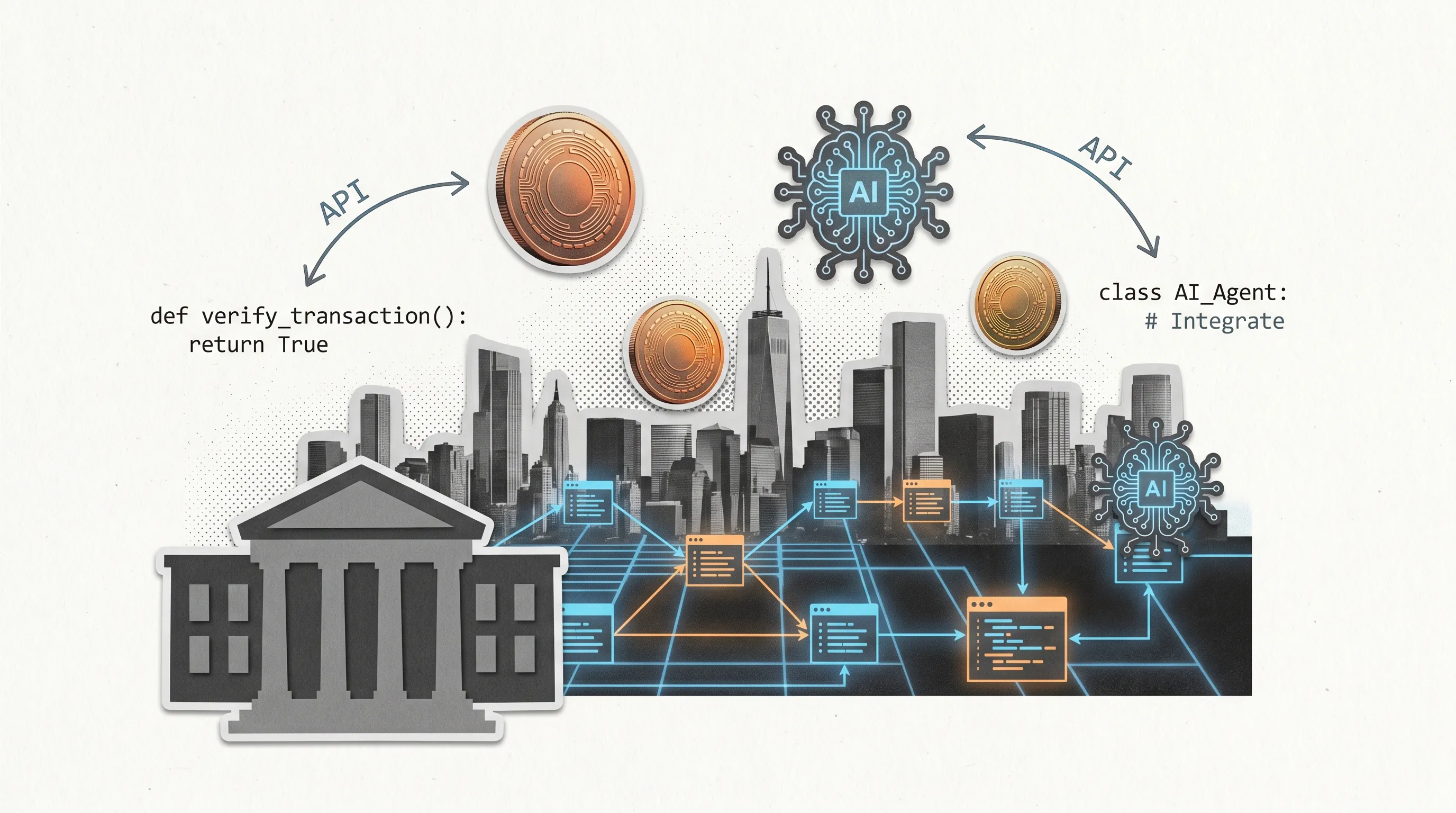
An illustration features a traditional bank building, artificial intelligence icons, digital coins, code snippets, and a network grid over a cityscape. © The GPU Trade Inc 2026
Catena Labs said it has closed a $30 million Series A to build financial plumbing that lets AI agents hold and use stablecoins for machine‑to‑machine payments, autonomous subscriptions and on‑chain economic coordination.
The company was founded by Sean Neville, a co‑founder of Circle who helped build the USDC stablecoin, and by other executives with payments and crypto backgrounds. Neville’s Circle pedigree is central to Catena’s pitch about combining crypto rails with regulated finance.
The Series A was co‑led by Acrew Capital and a16z crypto, following an $18 million seed round disclosed in 2025. The new capital is earmarked for product development and for supporting regulatory steps the company is taking in the United States.
Catena describes its offering as an “AI‑native” payments layer: programmable accounts that can hold stablecoins, policy controls that let humans set spending limits and approved payees, multi‑chain settlement, and audit trails so firms can govern agent behavior. Those primitives are designed so software agents can autonomously buy services, pay subscriptions and settle microtransactions.
The startup also announced it is applying for a national trust bank charter in New York, a move meant to give the company a regulated vehicle to custody deposits and process payments for autonomous agents. Seeking a charter signals Catena wants to combine crypto rails with traditional oversight.
Stablecoins are a practical choice for agent payments because they settle quickly, operate 24/7, and can move value across blockchains without the latency of banking hours, Catena has argued in its own blog posts explaining the product rationale. That technical fit, the company says, eases global machine‑to‑machine commerce.
Practical use cases include automated vendor payments for cloud compute, programmatic subscriptions for data or APIs, treasury management for fleets of agents, and tiny microtransactions for task marketplaces. The Block and other reporters noted Catena plans to expose these capabilities with developer tools and enterprise controls.
Investors and founders describe the round as evidence of appetite for plumbing — the low‑glamour infrastructure that connects AI models to money. Backers say building compliant rails is the missing piece that will let businesses safely delegate economic decisions to software.
The raise also comes against a backdrop of massive AI infrastructure spending across the industry, from datacenter deals to custom chips, underscoring that firms are backing not just models but the whole stack that supports machine‑driven services. Recent industry commitments to build capacity and secure compute supply illustrate how much capital is flowing into AI infrastructure broadly.
Catena’s emergence has already stirred others in the agent payments space. Open protocols, niche startups and payment middleware projects are racing to offer interoperable endpoints that let agents discover payment rails and settle onchain or offchain, according to sector coverage. That makes clear this is both a product and a standards challenge.
The technical and regulatory risks are nontrivial. Companies building agentic finance must solve custody, anti‑money‑laundering compliance, dispute resolution, and the governance problem of giving software controlled access to money. Catena’s charter effort and its emphasis on audit trails are direct responses to those concerns.
For buyers of AI services and platform builders, the funding matters because it signals a path to new monetization models: agents that autonomously negotiate and pay for services, programmable subscriptions billed in stablecoins, and new marketplaces where software actors transact with one another. If Catena succeeds, the next wave of AI products may be able to operate with more economic independence under human governance.