Chip Industry Urges Congress to Extend AMIC
SIA and 17 groups warn AMIC expiry could stall $640B in U.S. fab investments
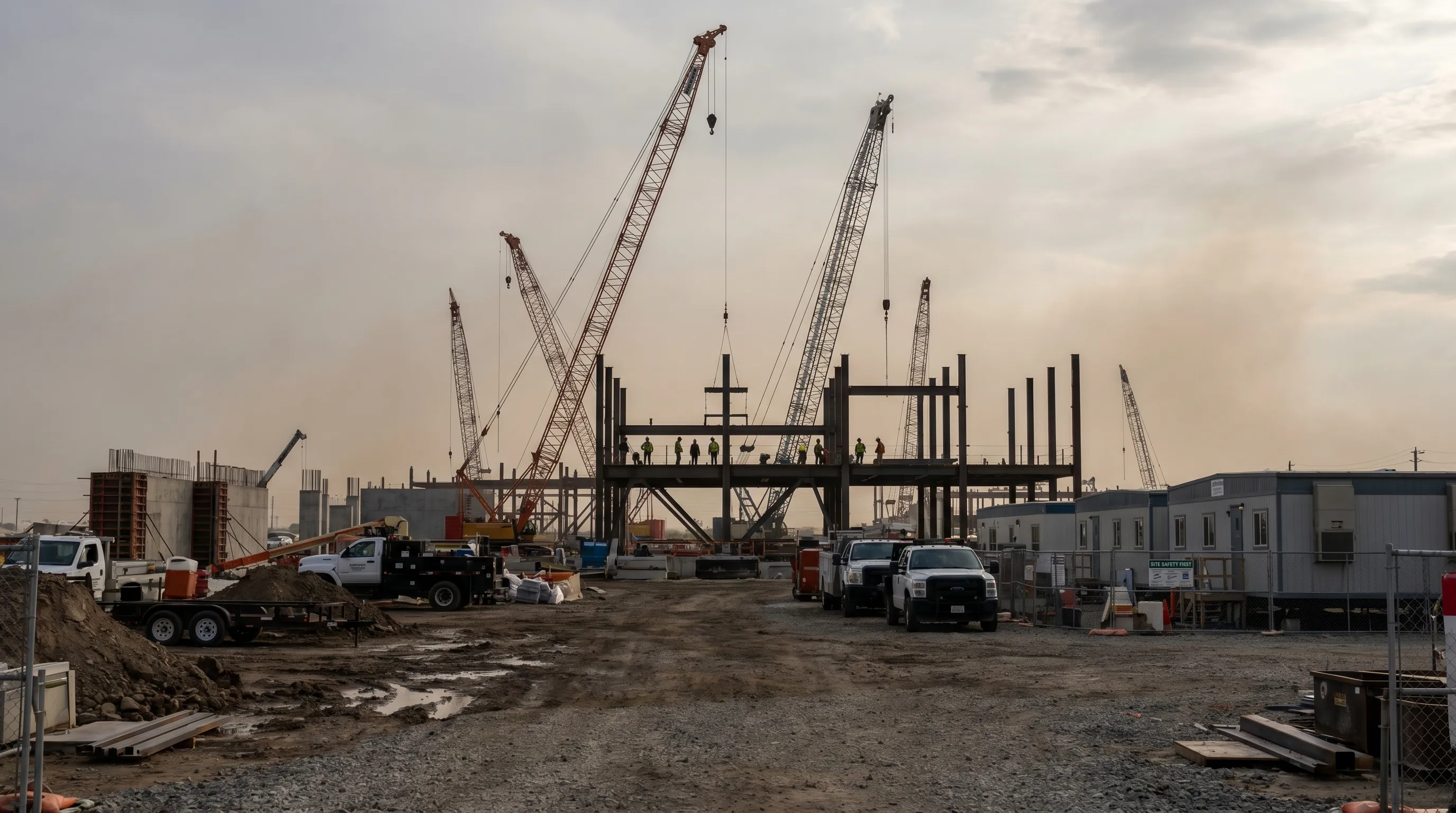
Multiple cranes tower over an active construction site where workers are assembling a structural steel framework alongside temporary trailers. © The GPU Trade Inc 2026
The Semiconductor Industry Association and a coalition of 17 other trade groups sent a joint letter to Congress on May 12–13, 2026, asking lawmakers to extend and broaden the Advanced Manufacturing Investment Credit (AMIC) before it expires at the end of 2026.
The AMIC is codified in U.S. tax law as Section 48D and provides an investment tax credit aimed at encouraging onshore semiconductor fabrication and related equipment. Under current law the credit equals 25% of a qualifying investment.
SIA and its partners say the credit has helped catalyze more than $640 billion in announced private semiconductor investments across roughly 140 projects in 30 states — a statistic the industry uses to underline the scale at stake if the incentive lapses.
The coalition’s letter does more than ask for a straight renewal. It urges Congress to expand AMIC’s scope to cover chip design and R&D activities, not only fabrication, arguing that design incentives would keep more of the semiconductor value chain and high-wage work inside the U.S.
Industry groups warn of a planning “cliff.” Building a modern wafer fab can take several years and tens of billions of dollars in upfront capital; a tax credit that disappears before projects are completed would, they say, undercut the economics of later project phases and new siting decisions. Several trade statements note that many fabs expect multi‑year construction and qualification timelines.
Timing is an acute technical issue. Some recent legislative proposals would change the credit rate or eligibility rules, but the underlying construction-start or placement-in-service deadlines tied to Section 48D remain consequential for whether new projects qualify. Policymakers and tax lawyers have flagged end-of‑2026 deadlines as the immediate risk window.
The industry push was not limited to SIA. SEMI, SIIA and other trade organizations issued their own letters and statements in mid‑May, stressing similar points: extend AMIC for multiple years and expand eligible activities to protect long-term competitiveness. The sign-on effort has broadened in recent weeks.
The SIA and several coalition members name large, well-known projects as evidence the credit is working — noting investments by foundries and manufacturers such as TSMC, Samsung and Intel among others in states including Arizona, Texas and Ohio. The industry argues those projects rely on stable tax and grant frameworks to justify follow‑on investment.
The appeal comes as demand tied to artificial intelligence and cloud infrastructure is reshaping chip markets. Market research firms say AI-related server and power‑IC demand is tightening certain wafer capacities and reinforcing the case for more domestic manufacturing of AI hardware. Industry groups cite those market shifts when asking for durable incentives.
On the Hill, lawmakers have already floated bills that would boost or extend the AMIC. The House BASIC Act (H.R. 3204) and the STAR Act are examples: sponsors propose raising the credit rate and lengthening the statutory window, and supporters in industry have publicly applauded those efforts. Whether such bills can advance through the competing priorities of the congressional calendar is now a practical question for both policymakers and corporate planners.
If Congress lets AMIC expire at the end of 2026, industry groups warn of concrete risks: slower follow‑on phases of announced fabs, possible re‑shoring delays, and weakened U.S. bargaining power versus countries that offer long‑dated, stable incentives. The coalition frames extension as a low-cost way to sustain the recent surge in domestic chip investment.
The next steps to watch are procedural. The letters are intended to prod Ways and Means and relevant appropriations and tax committees to fold an AMIC extension into pending tax or industrial policy bills in the second half of 2026. For industry, clarity this year matters: many capital plans assume predictable federal support when deciding where and when to break ground.