Etched exits stealth with working Sohu chip
Startup unveils rack-scale 'frontier inference clusters', $5B valuation and $1B in contracts
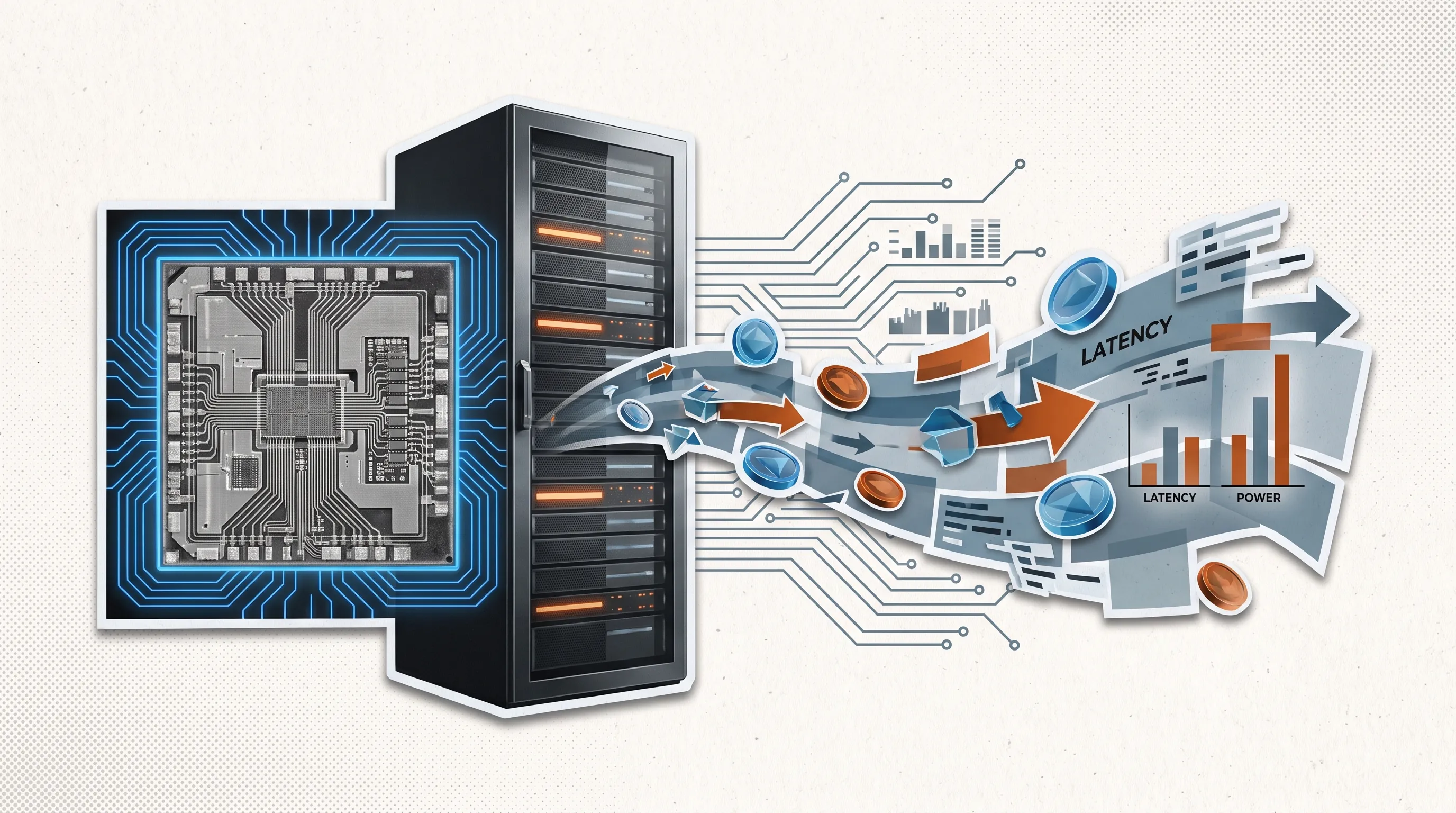
Etched, a U.S. AI‑chip startup, announced on June 30 that it is coming out of stealth with working silicon, rack‑scale systems in customer validation, more than $1 billion in signed contracts and a $5 billion post‑money valuation.
The company says its first silicon reached A0 (first‑pass) status on TSMC’s N4P process and that early racks built around that chip are in active validation with customers. Those technical details appear in Etched’s press materials and in reporting based on the company’s statement.
Etched also disclosed fundraising it had kept private until now: the startup says it has raised $800 million to date, including an unannounced $500 million tranche that closed in December at the $5 billion valuation. Reporters flagged the December close as the reason the company’s headline valuation was already in place before the launch.
Rather than sell bare chips, Etched is pitching a bundled product it calls “frontier inference clusters.” Those bundles combine the Sohu ASIC with custom racks, power and cooling, interconnects and management software — an integrated appliance meant to run large AI models in production. The company framed the approach as an alternative to GPU‑centric inference economics.
Technical materials and investor writeups describing Etched’s architecture point to two headline features: a “Low‑Voltage Inference” mode the company says reduces operating voltage for higher FLOPs density, and a shared Cluster‑Scale Memory (CSM) subsystem to lower latency across chips in a rack. Those design choices are central to Etched’s performance and efficiency claims.
Etched says it already has more than $1 billion in customer commitments for its clusters. The company and multiple trade outlets described those as signed contracts; outside observers note the figure mostly represents forward commitments and a pre‑production backlog that still needs fulfillment and independent benchmarking.
The move lands inside a broader industry shift: inference — the step of running trained models to serve users — is now the biggest recurring infrastructure cost for many AI services. That has prompted startups and some cloud vendors to pursue inference‑focused silicon and system designs that trade generality for tokens‑per‑watt gains. Etched’s announcement puts it squarely in that competitive field.
Etched will face immediate technical and commercial hurdles that have tripped other hardware hopefuls: proving sustained yields at scale on a bleeding‑edge node, delivering the software and toolchain for complex model workflows, and integrating racks into customers’ data centers without disrupting operations. Independent performance and efficiency measurements will be the clearest tests of the company’s claims.
The market Etched is addressing already has a mix of incumbents and specialists. NVIDIA remains the dominant supplier for many inference workloads, and other players such as d‑Matrix, Groq, Cerebras and cloud providers building internal silicon are pitching alternative cost and latency profiles. Analysts say the real question is whether a single‑stack appliance can undercut GPU economics across the many variants of production inference.
Etched’s public materials and investor notes name a roster of hires from large semiconductor and AI teams and say the company has pulled talent from established firms to build its stack. The startup also highlights partnerships and investor support that helped fund the stealth build. Those personnel and partner claims add credibility but do not replace the need for third‑party test results.
If Etched’s cluster approach delivers on its efficiency and throughput claims, it could shift how hyperscalers and large labs think about procurement for always‑on, high‑volume inference. Even so, many hyperscalers continue to design their own accelerators, which means Etched would be competing both with GPU suppliers and with internal chip programs at major cloud vendors.
For now, Etched’s next steps are clear in the company’s statements: finish validation of rack units, demonstrate yields and power numbers at scale, and begin shipments of initial racks this summer. Observers and customers will watch for independent benchmarks and for how quickly Etched can translate contracts on paper into operating systems in production. The announcement is a major claim; verification will determine whether it becomes a market‑shaping reality.