EU moves to streamline AI rules with guidance and Digital Omnibus
Brussels issues draft classification guidance and a political deal that reshapes high‑risk timelines
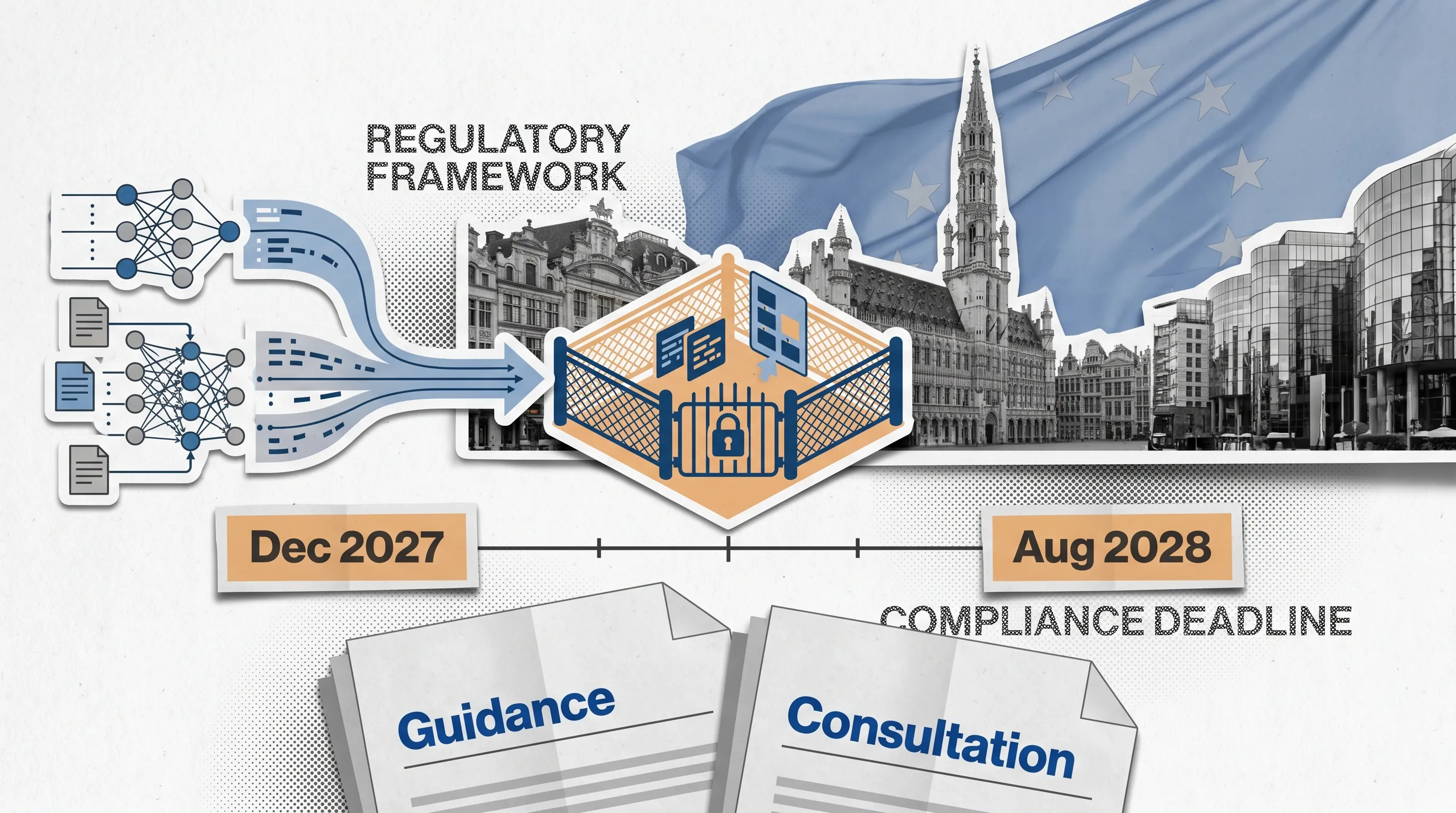
A graphic illustrates neural networks entering a gated regulatory framework, alongside a timeline detailing compliance deadlines between 2027 and 2028. © The GPU Trade Inc 2026
Brussels published two linked moves in mid‑May that reset how AI will be treated across the European Union and give vendors firmer ground for planning compliance. The European Commission released draft guidance on classifying high‑risk AI systems on May 19, 2026, and the co‑legislators reached a political agreement on the so‑called Digital Omnibus on May 7, 2026, with updates and commentary continuing through May 21, 2026.
The Commission’s draft guidance focuses on Article 6 of the AI Act and explains how to decide whether an AI system should be treated as high‑risk. The package includes three draft chapters with worked examples and practical checks to help providers and deployers determine classification and to promote consistent application across member states.
The Digital Omnibus political agreement, reached at the trilogue on May 7, resets key implementation dates that had been due in August 2026. Under the provisional deal, many high‑risk obligations for standalone systems listed in Annex III will apply from December 2, 2027, while obligations for AI systems embedded in regulated products will roll in from August 2, 2028.
The Omnibus also adjusts transparency and synthetic‑content timing. The provisional package moves certain watermarking and content‑labelling obligations and narrows the earliest enforcement dates for some disclosure rules, while leaving other transparency duties in place from August 2026 unless formally amended.
The Commission’s draft classification guidance explains two routes to high‑risk status under Article 6: first, where an AI system is itself a product or a safety component covered by EU harmonisation law listed in Annex I; and second, where a system fits one of the sensitive use cases listed in Annex III, such as biometric identification, recruitment, credit scoring, or border‑control applications.
To gather feedback the Commission opened a targeted stakeholder consultation on May 19, 2026. The draft guidelines are available on the AI Act Single Information Platform and the consultation runs for five weeks, closing on June 23, 2026, giving industry, public authorities, researchers, civil society and citizens a formal window to comment.
For AI vendors the combined signals matter most in timing and scope. The new sequencing gives firms more time to change product design and conformity assessment plans for product‑embedded AI, but it also creates an immediate need to review models that may still be high‑risk under Annex III and to document decisions about classification and risk mitigation.
Another practical change is a strengthened push for regulatory sandboxes. The Digital Omnibus text and the Commission press materials say more innovators will gain access to regulatory sandboxes, and for the first time announce the creation of an EU‑level sandbox to let regulated models be tested under supervised, real‑world conditions.
Supervisory architecture will shift too. The Omnibus would enhance the Commission AI Office’s oversight powers for certain AI systems — notably those relying on general‑purpose models or deployed through very large online platforms and search engines — and reaffirms the registration and transparency tools that national authorities will use.
The overhaul aims to reduce duplication with sectoral safety regimes such as the Machinery Regulation and medical device rules. The compromise clarifies that where sectoral law provides equivalent safeguards, AI requirements should dovetail rather than duplicate, although the Commission keeps powers to adopt AI‑specific delegated acts where gaps remain.
What happens next remains procedural. The Digital Omnibus political agreement is provisional and must be formally adopted by the European Parliament and the Council and then published in the Official Journal, after which amendments enter into force three days later. The draft classification guidance will be finalised after the public consultation and possible edits.
Compliance advisers and legal teams have already urged action. Law firms and compliance providers characterized the guidance and the Omnibus as clarifying and pragmatic: they called the delay for certain high‑risk deadlines a relief for product manufacturers but warned that other obligations and supervisory scrutiny will intensify.
For companies building or deploying AI the immediate checklist is simple: read the draft Commission guidance, use the worked examples to test whether systems fall under Annex I or Annex III, file comments in the consultation if there are borderline cases, and update roadmaps to reflect the staggered implementation dates.
The European Commission’s AI Act Service Desk and the Commission’s digital strategy pages host the draft documents, examples and the EU Survey link for submissions. Together the Digital Omnibus and the draft guidance reshape compliance calendars while creating an EU‑level space to test regulated models before full enforcement kicks in.