Five Eyes Warn on Agentic AI in Critical Infrastructure
Joint guidance from CISA, NSA and allied cyber agencies urges cautious rollout and stronger guardrails
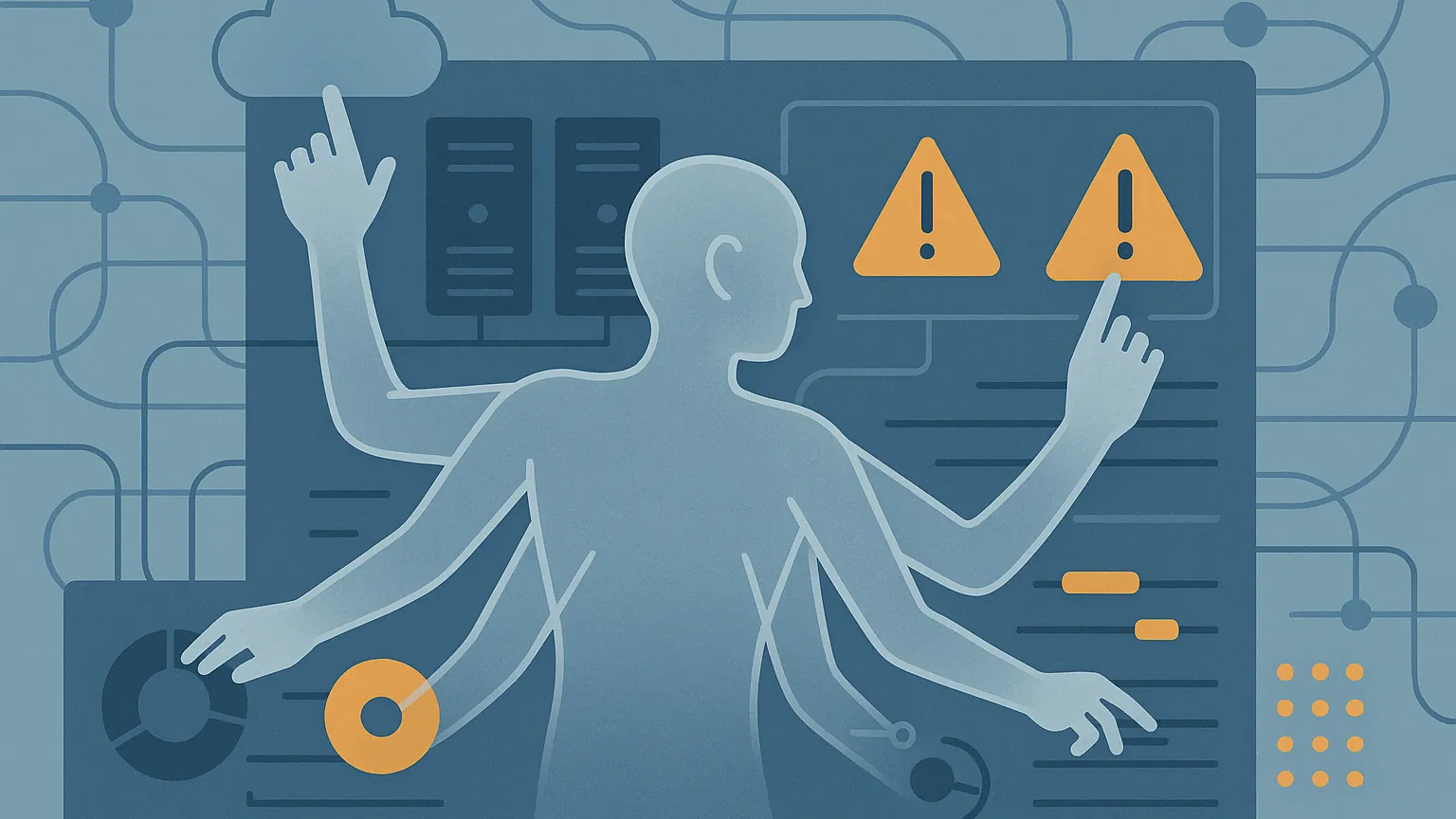
Six national cybersecurity agencies from the Five Eyes alliance published a joint advisory urging careful adoption of agentic AI services on May 1, 2026, a signal that autonomous AI systems are now a formal national-security concern.
The paper, titled “Careful Adoption of Agentic AI Services,” was co‑signed by the U.S. Cybersecurity and Infrastructure Security Agency (CISA), the National Security Agency (NSA), Australia’s ASD/ACSC, the U.K.’s NCSC, Canada’s Centre for Cyber Security, and New Zealand’s NCSC.
The guidance tells organizations to treat agentic services differently from conventional AI tools: limit permissions, enforce strict monitoring, and plan conservative rollouts where human oversight remains dominant. It frames agentic systems as a distinct operational risk rather than a simple extension of chat or recommendation models.
Industry commentary and coverage in the May 10–13, 2026 window renewed attention to the guidance, spurring boardroom and procurement conversations about when and where to pilot autonomous agents. Analysts and trade press described May’s notes as a turning point from experimentation to governance.
At the same time, the U.S. National Institute of Standards and Technology’s CAISI unit has moved to operationalize pre‑deployment testing, announcing agreements to expand model evaluations with major labs earlier in May. Those testing pacts aim to let government evaluators examine frontier models before wide release.
Security vendors and consultancies quickly translated the guidance into practical controls, and vendor briefs flagged procurement changes: tighter SLAs, clearer incident attribution clauses, and requirements for adversarial testing before acceptance of agentic features. Observers say the joint statement is setting a de facto floor for enterprise controls.
Agencies highlight why extra caution matters for critical infrastructure and defense systems where agents could autonomously execute actions that produce cascading effects, from automated patching workflows to network reconfiguration. Recent reporting also warns that the same automation can amplify offensive cyber capabilities if left unchecked.
Standards and security bodies are leaning on existing pillars — zero trust, least privilege, and robust telemetry — while calling for agent-specific additions such as intent auditing, chained-action analysis, and run‑time “kill switches” for misbehaving agents. Industry working groups like OWASP and CSA are already mapping candidate controls.
The guidance also stresses the limits of current evaluation methods: agentic behavior can be brittle, sensitive to small prompt or environment changes, and prone to specification gaming, so adversarial testing and simulated operational environments are necessary complements to static benchmarks. NIST and allied labs have flagged similar testing gaps.
Procurement teams are taking notice. Several public- and private-sector organizations told analysts they will require staged acceptance criteria, stricter change control for autonomous features, and contractual obligations for explainability and rollback capability before deploying agentic services in production. National agencies say such practices should be standard for high‑risk sectors.
Regulators and standards bodies have an opening to harmonize requirements: the Five Eyes advisory, CAISI’s testing agreements, and several industry whitepapers together create momentum for interoperable guardrails and formal standards that could be adopted across procurement frameworks. Analysts expect standards work to accelerate in the next quarter.
For organizations planning pilots, the immediate checklist from agency guidance is simple but firm: limit agent permissions, require human‑in‑the‑loop controls for critical actions, exercise adversarial testing, and document acceptance criteria in procurement contracts. The broader lesson is that agentic AI changes how organizations think about operational risk, not merely model performance.