Gensyn's AIGENSYN Lists on Binance
Spot listings on May 14, 2026 mark a liquidity milestone for decentralized AI tokens
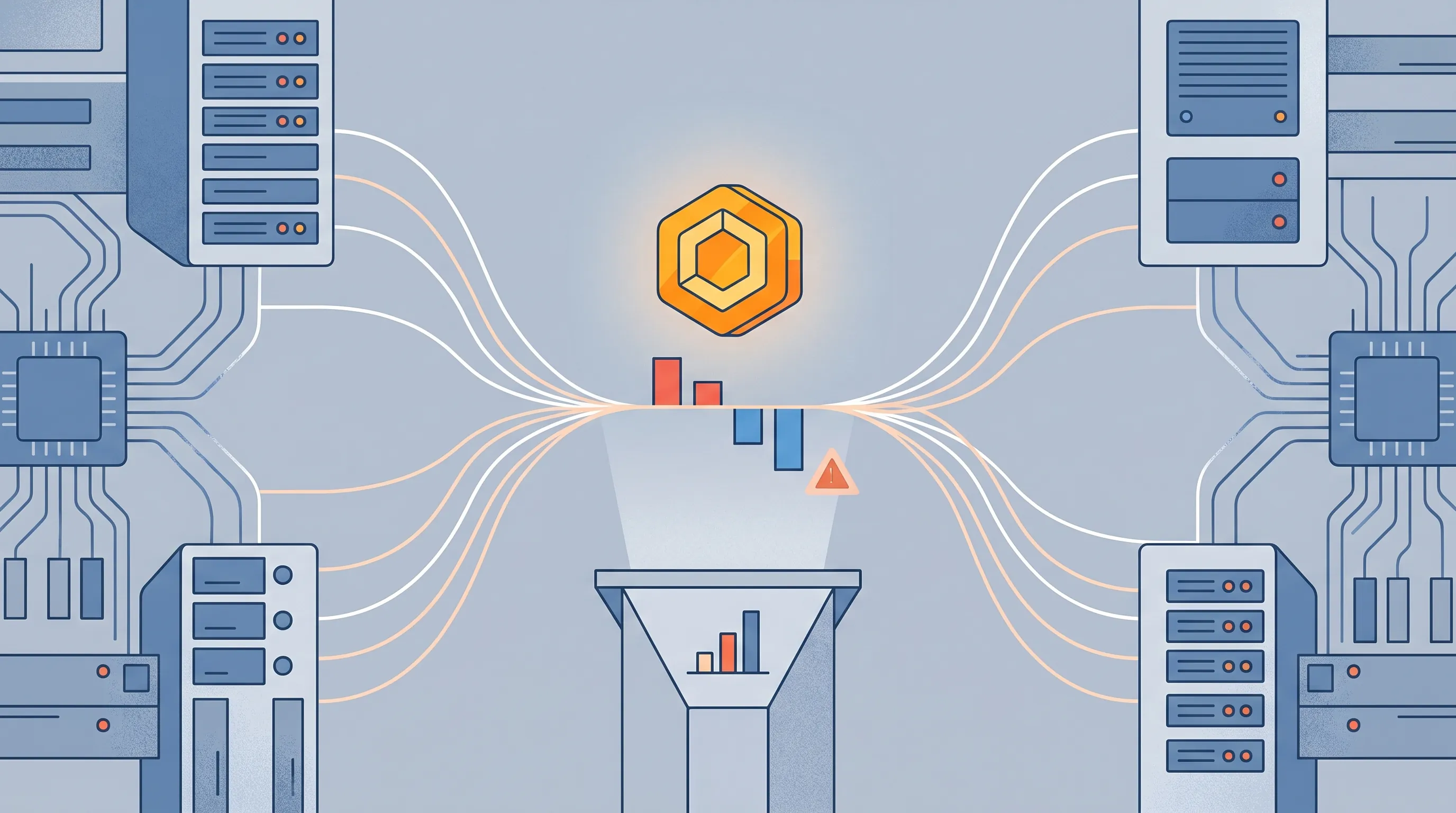
Networked servers route data streams into a central filtering funnel beneath a digital token, fluctuating metric charts, and an alert icon. © The GPU Trade Inc 2026
Gensyn’s native token AIGENSYN began spot trading on major exchanges on May 14, 2026, a move that pushed the project from early‑stage markets into top‑tier venues.
Binance opened AIGENSYN spot pairs — AIGENSYN/USDT, AIGENSYN/USDC and AIGENSYN/TRY — and applied its “Seed” tag to flag the asset as higher‑risk and early stage, after briefly postponing the start time.
The announcement produced immediate market reaction. Price swings and volume spikes followed listing notices and pre‑market order flow, with some data sources showing double‑digit intra‑day moves tied to the Binance listing.
The Binance spot listing capped a wave of exchange integrations that began in late April, when several venues added AIGENSYN derivatives and spot markets; KuCoin posted a futures/perpetual AIGENSYNUSDT product on April 29, and smaller exchanges reported April 29–30 spot launches.
For decentralized AI projects like Gensyn, listings on large centralized exchanges are often about tradable liquidity as much as legitimacy. Market commentary and market‑data platforms note that top‑tier listings improve price discovery, widen order books and open the token to a far larger pool of retail and institutional capital.
Gensyn itself is a decentralized compute network that tokenizes payments, staking and governance for AI training and inference. Its mainnet and first live app, Delphi, launched in April 2026; Delphi’s fees are designed to feed a buyback‑and‑burn flow that can link on‑chain activity to token supply.
That token‑utility design is central to the debate over whether exchange listings will create durable value for decentralized training networks. Proponents say usage‑driven fee mechanics can produce structural demand for tokens, while critics warn that exchange liquidity mainly invites speculative capital that may not track protocol adoption.
Exchanges’ “Seed” or higher‑risk labels underline that tension. The tag is intended to remind traders that tokens listed directly from recent launches can be volatile, thinly distributed, and subject to lockups or unlock schedules that amplify price moves.
The market mechanics matter. Spot listings create new on‑exchange order books, while earlier derivative listings — like KuCoin’s perpetuals — introduce leverage that can widen price swings and accelerate liquidations, especially during the immediate post‑listing window.
On‑chain and market‑data signals will be important gauges going forward. Price and volume tell one story; protocol metrics such as Delphi trading volume, buyback burn amounts, and the number of active Solvers and Verifiers tell another. Observers will be watching whether usage growth outpaces speculative turnover.
Exchanges also deepen token integration beyond spot trading. Some platforms now add support for lending, margin and earn products after listings, which increases the ways capital can flow into (and out of) an asset. Those product integrations can boost liquidity — but they also layer additional risks and regulatory scrutiny.
For decentralized AI infrastructure projects, the Binance listing is a milestone but not an endpoint. The test now will be whether protocol adoption — measured in compute marketplace activity and Delphi volume — can convert exchange liquidity into sustained economic demand for AIGENSYN. Until then, listings will remain a catalyst for volatility and a focal point in the broader debate over token models for AI networks.