Google, Blackstone Launch TPU Cloud Venture
Blackstone will back a US TPU compute-as-a-service that offers enterprises a new route to Google AI chips
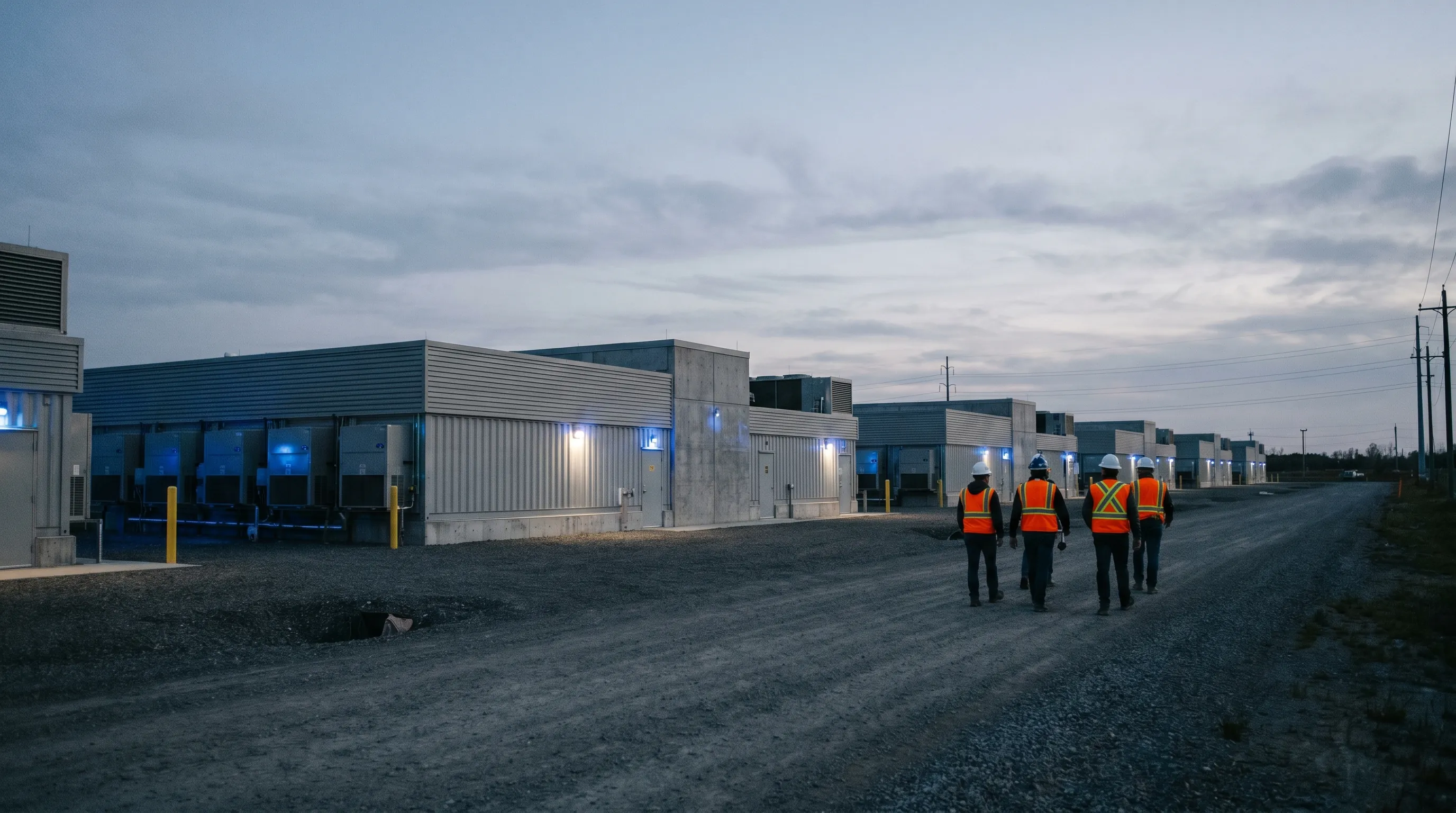
Workers in high-visibility gear walk along a gravel road past a row of modular infrastructure facilities equipped with external cooling units. © The GPU Trade Inc 2026
Alphabet’s Google and private equity giant Blackstone announced a new U.S.-based joint venture this month to sell data‑center capacity and Google’s Tensor Processing Units (TPUs) as a compute‑as‑a‑service product.
Blackstone is committing an initial $5 billion in equity to the venture and the partners said they expect to bring the first 500 megawatts of capacity online in 2027.
The structure moves TPU access beyond the traditional Google Cloud procurement model by giving enterprises another channel to run models on Google’s custom accelerators rather than forcing all TPU workloads through Google Cloud’s commercial platform.
Analysts and industry reporters immediately compared the deal to the rise of “neoclouds” — specialized vendors that sell accelerator capacity outside the big public clouds — because it pairs proprietary silicon with large‑scale infrastructure finance.
Blackstone will be the majority investor in the new company and the venture will be led by Benjamin Treynor Sloss, a former Google infrastructure executive tapped to run the business.
Reuters and other outlets reported the broader financing could grow with leverage to an enterprise value in the tens of billions, with some coverage noting a possible $25 billion scale once debt is included.
For enterprise buyers the practical promise is simple: guaranteed access to TPU compute without having to compete directly in Google Cloud spot and capacity markets. That can matter as companies move from experimentation to sustained, large‑scale training and inference.
The size of the planned deployment — 500 MW initially — highlights how AI compute is being treated as long‑duration industrial infrastructure rather than a conventional IT purchase. Utilities, transmission, and power procurement become central to the unit economics.
Industry veterans say the move illustrates growing capital‑markets strategies to monetize AI hardware and data‑center assets by packaging them into investable businesses. “This announcement is another indicator that AI compute is becoming its own infrastructure asset class,” one analyst told Data Center Knowledge.
The deal is also strategic for Google. By partnering with Blackstone, Google can expand the reach of its TPU ecosystem, deepen supply arrangements for its custom chips, and share balance‑sheet and buildout risk while retaining control of chip design and software.
The joint venture also raises questions for the existing neocloud players and the GPU‑centric market. Many specialized providers today use NVIDIA GPUs; a TPU‑centered competitor backed by Blackstone could pressure pricing and capacity dynamics in specialized AI compute markets.
Regulators, customers, and competitors will watch how access, pricing, and contractual terms are structured — especially whether TPUs made available through the venture differ in features, network integration, service level agreements, or data governance from those offered on Google Cloud. The commercial and policy details will shape whether this becomes a durable new distribution channel or a niche alternative.