House releases Great American AI Act discussion draft
Bipartisan draft seeks national AI rules, temporarily preempts some state laws
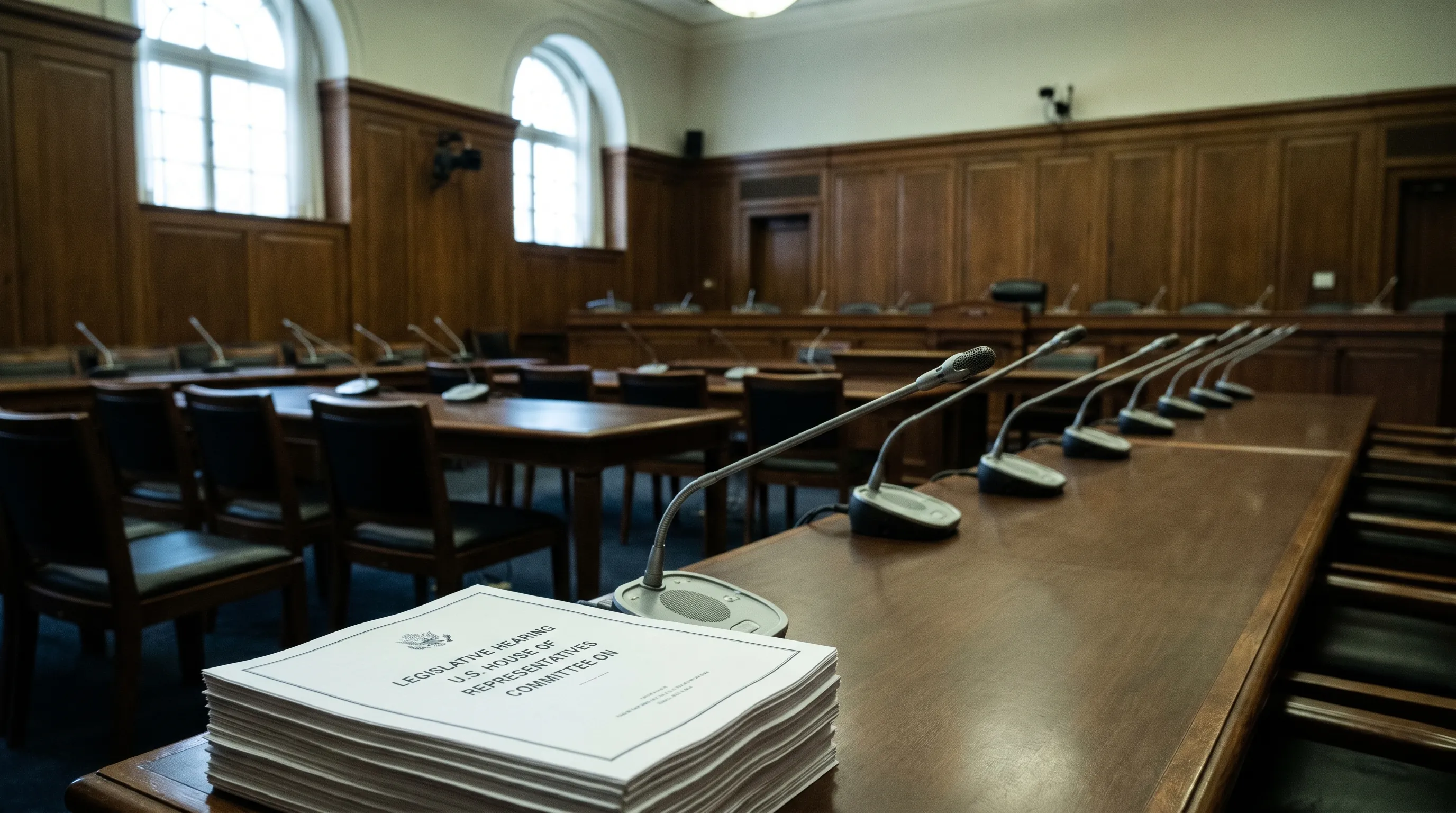
House lawmakers on June 4, 2026 released a bipartisan discussion draft of the Great American Artificial Intelligence Act, a wide-ranging framework meant to set national standards for AI safety, workforce protections, and government procurement.
The draft — released by Reps. Jay Obernolte (R-Calif.) and Lori Trahan (D-Mass.) — runs hundreds of pages and is being circulated for public comment before any formal introduction in Congress. Sponsors say the text is intended to spark negotiation and solicit feedback from industry, labor, researchers, and the public.
A central and controversial element is federal preemption: the draft would bar certain state laws that specifically regulate the development of AI models for a limited period, a move proponents say will avoid a conflicting patchwork of 50 state regimes. Reporting and the draft text point to a roughly three-year federal preemption window.
The bill would codify a new Washington role for standards and oversight by formally establishing the Commerce Department’s Center for AI Standards and Innovation (CAISI), charging it with voluntary guidelines, testing frameworks, and coordination across agencies. The draft also authorizes funding to support those activities.
On frontier models and so-called advanced foundation systems, the draft proposes evaluation, testing, and auditability requirements aimed at identifying systemic risks before broad deployment, and it lays out mechanisms for independent testing and model evaluations. That language draws on concepts from recent state and federal proposals.
Workforce provisions are prominent: the discussion draft includes funding streams for AI literacy, retraining and transition support, and research into labor impacts to help workers and communities adapt to automation and model-driven changes in employment. Labor-focused groups are a named audience for the programs.
The text also mixes cybersecurity and procurement changes with R&D boosts — reauthorizing parts of prior cybersecurity law, backing testbeds and access to federal datasets, and codifying support for national research resources like the NAIRR and new AI testbed programs. Sponsors frame this as both safety and competitiveness policy.
Industry groups gave a mixed but mostly receptive initial response, praising the draft’s attention to model governance and standards while asking for workable compliance timelines. Trade groups including CTA, BSA and ITI highlighted the bill’s potential to provide a single national standard.
Labor unions and some advocacy groups pushed back immediately, arguing that federal preemption would strip states of tools to protect workers and communities and that the draft could limit faster local responses to harms. Union leaders and civil-society groups called for stronger labor protections and local enforcement roles.
Legal analysts and policy shops note the draft borrows heavily from recent state laws and prior federal proposals, but they flag several hurdles: differences between House and Senate priorities, possible constitutional questions about sweeping preemption, and the political difficulty of moving large technical bills through the chamber. The path from discussion draft to law will be contentious.
The sponsors say the draft is deliberately a conversation starter: it invites public comment, stakeholder meetings, and technical submissions before a formal bill is filed. The back-and-forth is intended to refine the balance between safety, innovation, and state roles before lawmakers vote.
Whatever its final form, the discussion draft puts Congress squarely into the center of a debate over whether the United States should have a single federal rulebook for AI or leave major leeway to states and sectors. The next weeks of comment, hearings and negotiation will show whether bipartisan consensus can hold.