Hyperscale Data Files $300M ATM as AI Data-Center Push Grows
Company launches $300M at‑the‑market program, declares preferred dividends amid Michigan expansion talks
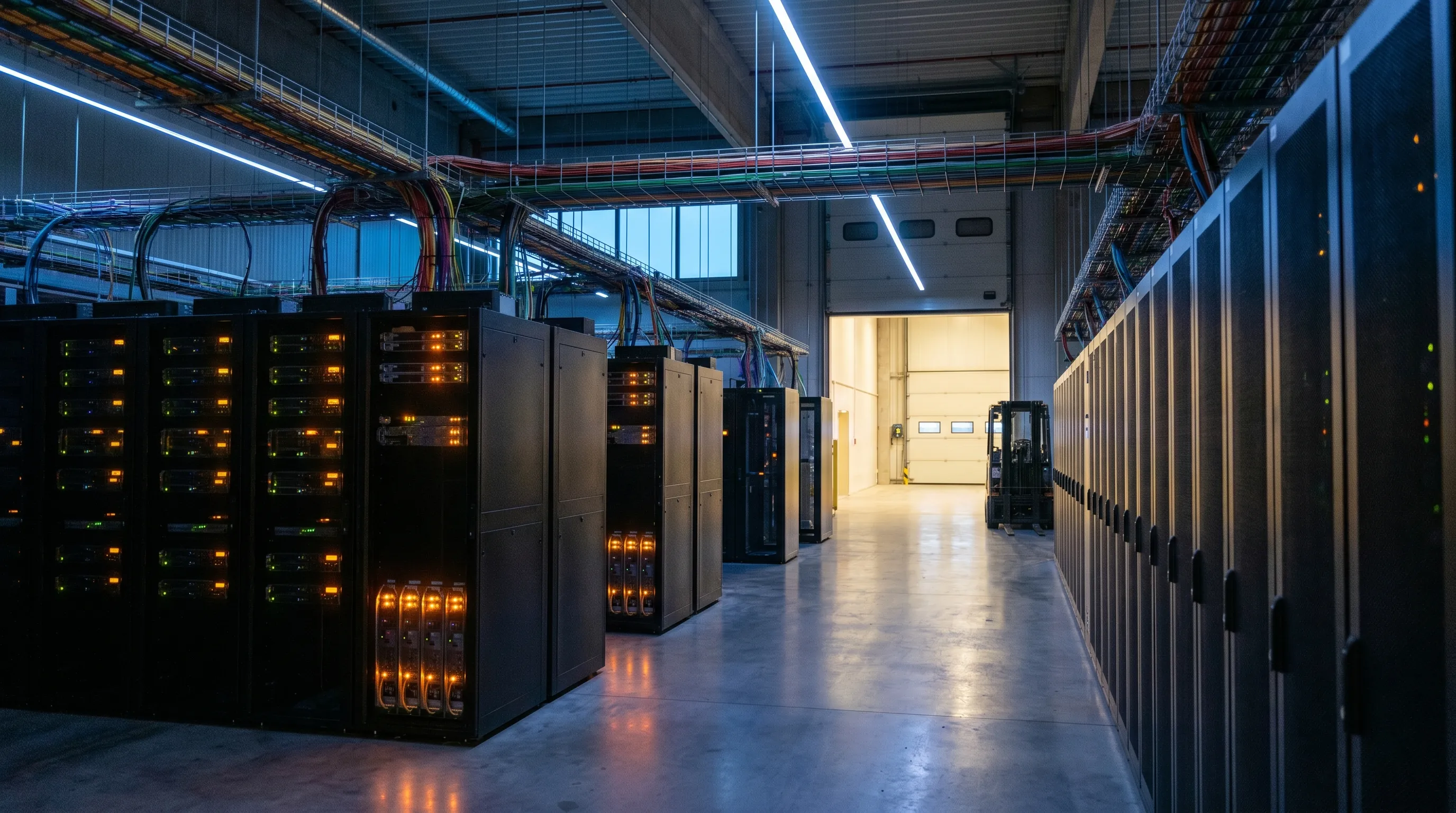
Hyperscale Data said on June 18 that it has established an at‑the‑market (ATM) equity program that could raise up to $300 million by selling Class A common stock over time, and the company also disclosed new cash dividends on two series of preferred shares.
The ATM program will be conducted through Spartan Capital Securities as sales agent and is being offered under a shelf registration the company declared effective in December 2025, a method that lets Hyperscale sell shares into the market at prevailing prices rather than in a single block sale.
At the same time, Hyperscale’s board declared monthly cash dividends of $0.2708333 per share on its 13.00% Series D preferred and $0.20833 per share on its 10.00% Series E preferred, with a record date of June 30 and a payment date set for July 10, 2026.
Markets reacted quickly: Hyperscale’s shares plunged in after‑hours trading following the ATM announcement, with one market report saying the stock fell roughly 22% after the program was disclosed.
The moves come as the company pursues a strategic pivot from Bitcoin mining toward AI colocation and GPU compute services at its Michigan campus, where Hyperscale said its Alliance Cloud Services unit is in advanced talks on a master services agreement that could initially provide tens of megawatts and — if executed — be worth more than $1 billion over the contract term.
Hyperscale has also laid out an aggressive long‑range plan for its Michigan site, aiming to expand capacity from current levels to roughly 340 megawatts of AI compute leasing by 2029 and to launch an on‑demand NVIDIA GPU cloud platform, moves intended to convert power and space into higher‑margin AI services.
The new ATM program follows earlier equity sales and ATM activity: filings show the company has previously sold Class A shares under an ATM for gross proceeds and, through May, had sold more than 137 million Class A shares under prior arrangements for roughly $24.7 million in gross proceeds.
Hyperscale’s broader balance sheet context helps explain the timing. The company has been under closer Exchange scrutiny after reporting low stockholders’ equity and received a NYSE American listing extension to June 18, 2026 while it pursued a compliance plan; recent SEC filings and investor notices document the company’s need to shore up capital and liquidity.
The ATM filing and accompanying corporate updates are a clear example of a small‑cap AI data‑center operator using flexible equity tools to scale GPU capacity quickly, a pattern that has become common as demand for GPU racks outstrips available cash and loan markets. Industry reporting shows hyperscale and AI buildouts are expanding rapidly even as power, equipment lead times, and financing constraints bite.
Investors have punished equity printing in similar situations: large equity packages and ATM programs announced by server and infrastructure suppliers have often produced sharp, immediate share price declines as markets price dilution and execution risk into valuations. That dynamic helps explain both the stock move here and the company’s decision to stage potential raises over time.
For sector watchers, Hyperscale’s prospectus and 8‑K will serve as a near‑term barometer of funding appetite for smaller AI data‑center players — how much the firm actually sells, at what price, and whether it secures the Michigan colocation contract will shape whether the ATM becomes a bridge or a long‑term dilution path.
In the weeks ahead, key items to watch are filings that show actual share issuance under the ATM, any signed master services agreement for Michigan capacity, and how management deploys proceeds between data‑center buildout, Bitcoin treasury strategy and working capital needs; each will change the commercial math for scaling GPU density at smaller operators.