Hyperscale Power builds high‑frequency solid‑state transformer
Raised €5M to prototype a much smaller transformer for rising AI rack power
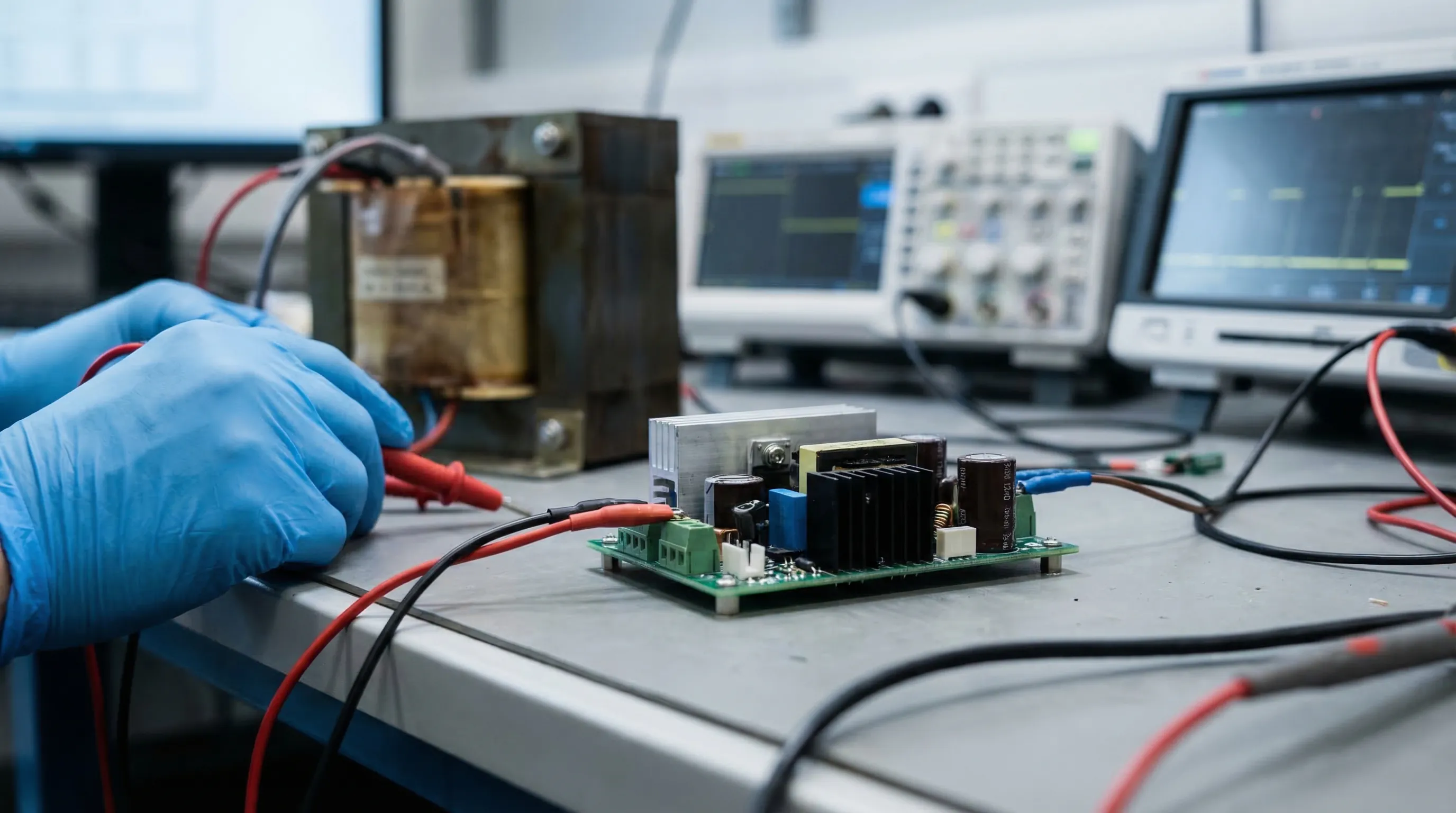
A person wearing blue gloves applies red test probes to components on an electronic circuit board alongside diagnostic equipment. © The GPU Trade Inc 2026
Hyperscale Power says it is building a solid‑state transformer that will be far smaller than traditional iron‑core transformers by running at much higher switching frequencies, and it has raised a €5 million seed round to build a prototype.
The funding round was led by World Fund and Vsquared Ventures, the company told TechCrunch, and the money will go toward a lab prototype of the device. Hyperscale positions the design as a replacement for bulky, century‑old iron‑core transformers in grids and data centers.
Interest in solid‑state transformers (SSTs) has surged: TechCrunch calculates roughly $280 million flowed into SST startups in recent months as investors chase smaller, faster power conversion for grids and high‑density computing. Advocates say SSTs can reduce parts counts, add control features, and shrink conversion hardware.
Hyperscale’s technical pitch rests on frequency. Instead of the mains frequency or low‑kilohertz converters, the startup says it will step power up into the tens of kilohertz range, perform the necessary conversion electronically, then step it back down — a method the company argues lets magnetic components be dramatically smaller.
The two co‑founders bring direct technical experience. CEO Daniel Rothmund and co‑founder Sami Pettersson have worked on SST designs previously; Rothmund completed a PhD project at ETH Zürich in which he designed and built a device the paper and company materials described as 99.1% efficient.
Hyperscale enters a crowded and well‑funded field. TechCrunch and trade outlets name Amperesand, DG Matrix, and Heron Power as leading competitors as startups race to commercialize SSTs for EV charging, microgrids, and data centers. Several of these companies have raised large rounds in recent months.
Recent funding rounds highlight the scale of investor interest: Heron Power closed a reported $140 million Series B, Amperesand has raised rounds reported at tens of millions to support medium‑voltage SSTs, and DG Matrix announced a $60 million Series A to scale its platform for AI data centers. Those deals are driving the $200‑plus million funding tally cited by industry trackers.
The timing of the push is driven in part by rising rack power densities inside data centers. Hyperscale and industry observers point to Nvidia‑led roadmaps and vendor plans that already put many racks above 100 kilowatts and that anticipate megawatt‑class racks within a few years. That shift makes transformer size and placement a practical bottleneck for future deployments.
Hyperscale’s CEO framed the scale problem bluntly: as rack power grows, the transformers and rectifiers needed to feed servers can become as large or larger than the compute they serve. The company quotes an internal comparison that shows power conversion gear ballooning as per‑rack power climbs.
Proponents argue SSTs can cut components, improve grid and data‑center stability, and shrink the physical footprint of power conversion equipment — advantages that matter for hyperscalers facing space, cooling, and interconnection constraints. Early vendor messaging and tests back those claims, though scaled, field‑grade demonstrations are still limited.
The technology is not without hurdles. SSTs demand high‑speed power electronics, tight thermal management, new protection and control schemes, and industry standards for integration with utility and data‑center systems. Startups and incumbents are moving from lab prototypes to field trials and manufacturing scale‑up this year, highlighting the engineering and supply challenges ahead.
For Hyperscale, the €5 million seed is explicitly aimed at a prototype build and lab validation; the company is also participating in accelerator and industry programs to iterate its design. If Hyperscale can translate its higher‑frequency approach into reliable hardware, the startup argues SSTs will be necessary to keep AI infrastructure scaling without being limited by power‑conversion bulk.