Micron, Netlist Reach $600M Patent-License Deal
Five-year license settles litigation; Micron to pay $30M quarterly for AI memory technology
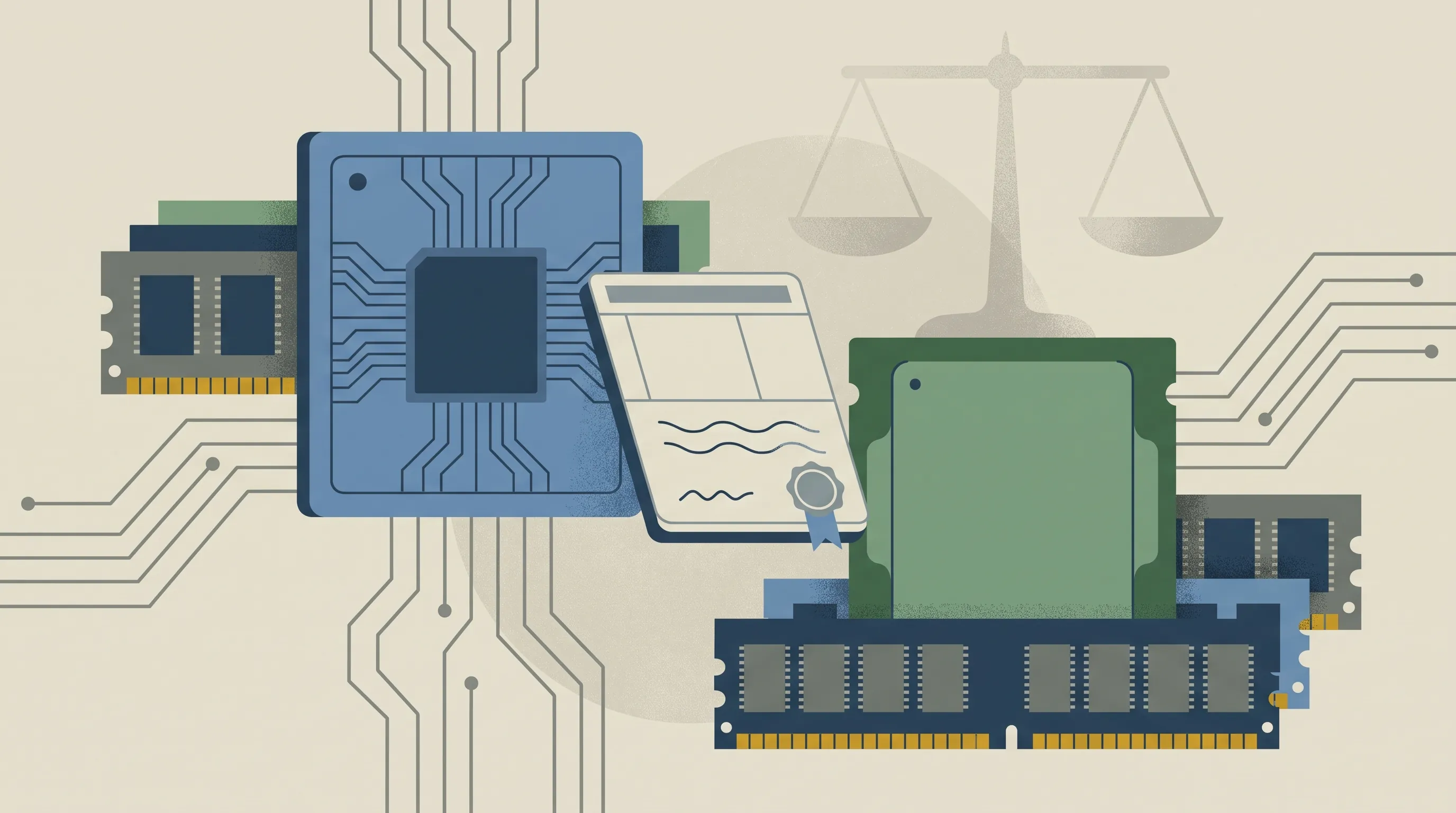
An illustration depicts computer processors, memory modules, and circuit pathways alongside a sealed document and the scales of justice. © The GPU Trade Inc 2026
Micron Technology and Netlist announced on Oct. 6, 2026, that they have signed a settlement and a five-year patent-license agreement resolving all pending litigation between the companies.
Under the terms, Micron will pay Netlist $30 million each quarter from the fourth quarter of 2026 through the third quarter of 2031 — a total of $600 million over 20 quarters.
Micron also receives a multi‑year, worldwide license to Netlist’s patent portfolio. Netlist said the portfolio includes patents tied to server DIMMs and High Bandwidth Memory technologies used in AI‑optimized products.
The agreement closes a long-running dispute that produced a large jury award against Micron in 2024 and later rounds of litigation and administrative proceedings. Netlist has cited a $445 million damages verdict from earlier litigation as part of the background to recent settlements.
Netlist’s press materials and its SEC filing say the settlement includes mutual releases of the pending claims identified in the agreements, and it replaces active court and administrative actions between the parties.
The deal follows a recent pattern of Netlist leveraging patent suits into licensing agreements: Netlist reached a separate cross‑license and commercial arrangements with Samsung earlier in 2026. That precedent likely influenced negotiations with Micron.
Analysts say the license has immediate commercial and legal effects. For Micron, the agreement removes a legal overhang on certain memory modules and lets the company continue selling products that customers use for AI servers and accelerators without interruption.
For Netlist, the structured payments turn litigation leverage into predictable revenue over five years and reduce the risk and cost of ongoing court fights. The quarterly cadence also spaces cash flow for both companies.
The settlement could affect High Bandwidth Memory (HBM) supply and server memory dynamics. HBM is a premium memory family used in some AI accelerators and high‑performance GPUs; licensing terms for core patents can alter pricing, sourcing choices and supplier bargaining power.
Customers building AI‑optimized systems and data centers watch such deals because they influence which component makers can supply HBM and server DIMMs without legal exposure. Some original equipment manufacturers may prefer suppliers with cleared patent positions to avoid downstream risk.
The Micron–Netlist settlement is part of a broader industry shift: memory suppliers and device makers are increasingly resolving disputes through licensing rather than protracted injunction fights. That trend can speed product availability but may raise the cost of advanced memory as licensing fees are incorporated into supply agreements.
Regulators and customers will likely track whether similar deals with other DRAM makers follow. Netlist has engaged multiple large memory firms in recent years, and further licensing outcomes could reshape vendor partnerships, procurement strategies and margins across the AI memory supply chain.