NVIDIA Earnings and Packaging Moves Shape AI Capex
Earnings, partner server deals and a $1.5B packaging pact are reframing AI infrastructure spending
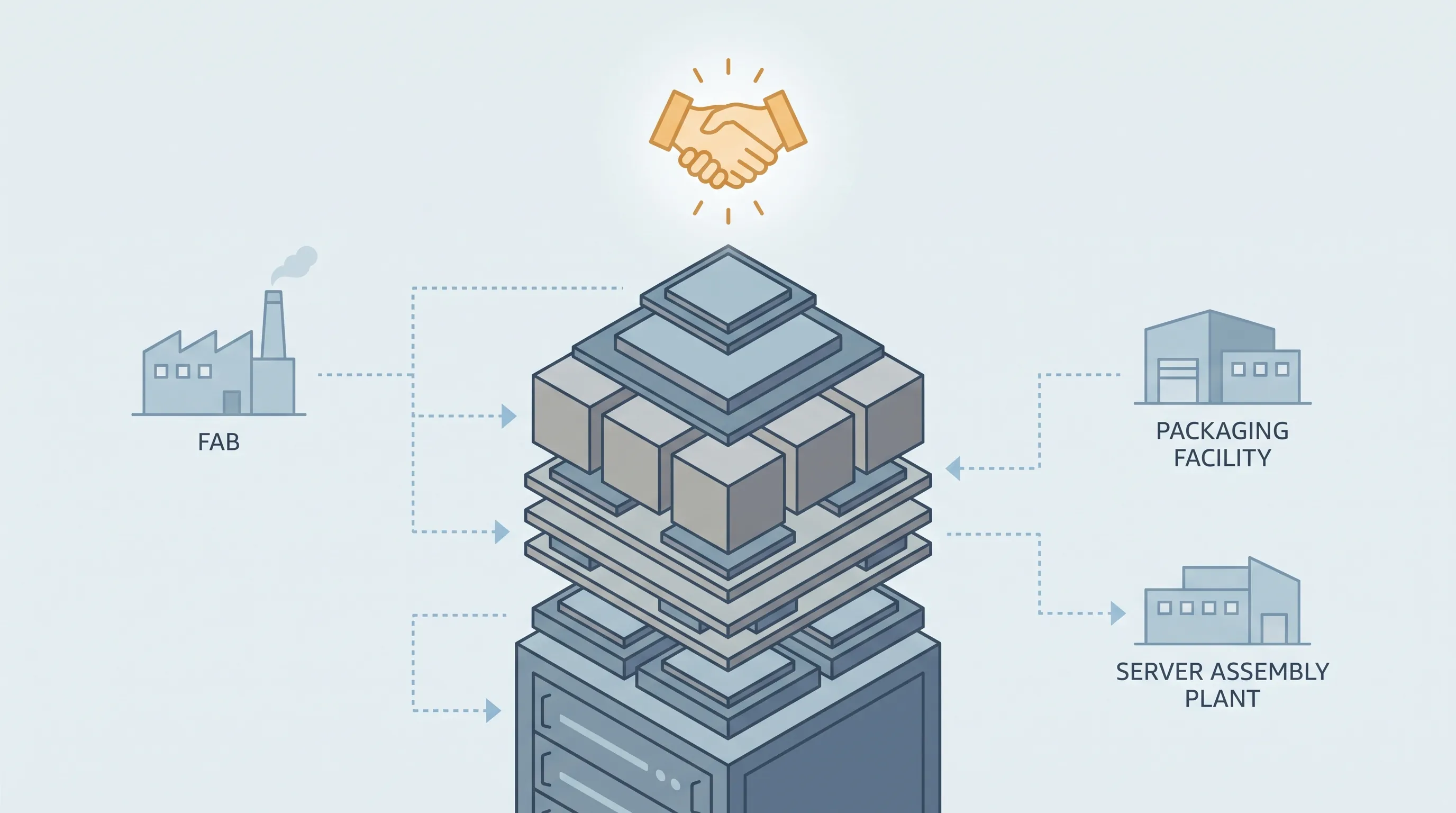
NVIDIA’s recent financial disclosures and product announcements are no longer just corporate housekeeping. They are primary inputs to forecasts for AI capital expenditure because customers and investors treat the company’s supply commitments and roadmaps as a proxy for how fast large-scale AI infrastructure can be built.
The company’s fiscal reporting this year signaled both massive demand and specific supply risks that matter to planners. NVIDIA reported strong fiscal 2026 results and continued growth in data-center revenue, while its filings and investor materials flagged constraints in manufacturing and packaging as a key operational risk.
One of the clearest market responses came in July 2026, when NVIDIA agreed to a multi‑year, roughly $1.5 billion strategic arrangement with Amkor to expand advanced packaging and test capacity in the United States. Analysts and customers immediately treated the deal as an effort to ease a chokepoint that had been slowing GPU deliveries.
Server makers and system partners amplified the signal. At GTC and in separate announcements, NVIDIA and its OEM partners — including HPE, Cisco, Dell, Lenovo and Supermicro — rolled out validated server designs and new Blackwell‑class products aimed at enterprise AI workloads, underlining that orders and system availability will shape how enterprises time capex.
That focus on packaging is not academic. Advanced packaging platforms such as CoWoS and the availability of high‑bandwidth memory (HBM) have become binding constraints for next‑generation accelerators, pushing lead times and tying up capacity across the supply chain. Industry analysts and trade press have documented long booking horizons and tight interposer and HBM production.
NVIDIA’s own disclosures and annual review reflect this reality: the company warns investors that limited packaging and component availability can extend lead times, inflate costs, and force inventory management choices that ripple through customer capex plans. Those corporate caveats make NVIDIA’s public supply commitments a de facto industry forecast.
Product roadmaps matter just as much as supplier deals. NVIDIA’s announcements this year — including new CPUs and server‑class Blackwell and Vera platform launches — give customers a timetable for when more powerful, denser systems will be orderable and worth deploying. Those timelines feed cloud and enterprise capex models in real time.
Investors and large customers watch several concrete signals: prepayments or capacity reservations with suppliers, public OEM availability dates, and initial ship windows for HBM‑enabled platforms. NVIDIA’s prepayment-style support for Amkor and other strategic moves are therefore read as supply-side confirmation that more systems will be produced — but only on the supplier’s timetable.
Market analysts say the packaging bottleneck has pushed some organizations to postpone or stagger AI data‑center investments until supply becomes more predictable. Others accelerate orders now at higher cost to secure future capacity, a decision that tightens near‑term capex but reduces timing risk for production rollouts. Both strategies raise uncertainty for forecasters.
For cloud providers and hyperscalers, the calculus is especially complex. Large operators can often buy whole wafers and prebook packaging slots, but they still face the same supply‑chain constraints on HBM stacks, interposers and thermal‑management components that determine how many usable racks make it into a data center. That makes NVIDIA’s partner roadmaps and supplier contracts pivotal reading for financial planners.
The upshot for capex forecasting is that NVIDIA’s corporate moves now carry double duty: they reveal customer demand and they shape the mechanics of supply. Forecasters who want reliable AI‑infrastructure projections will track three items closely — confirmed supplier expansions or prepayments, OEM server availability dates, and independent signals about HBM and advanced packaging throughput. Together those items will govern how fast promised AI projects can turn into real racks and real compute.