NVIDIA launches Jetson Thor
New T3000 and T2000 modules push multimodal AI and agentic robotics to the edge
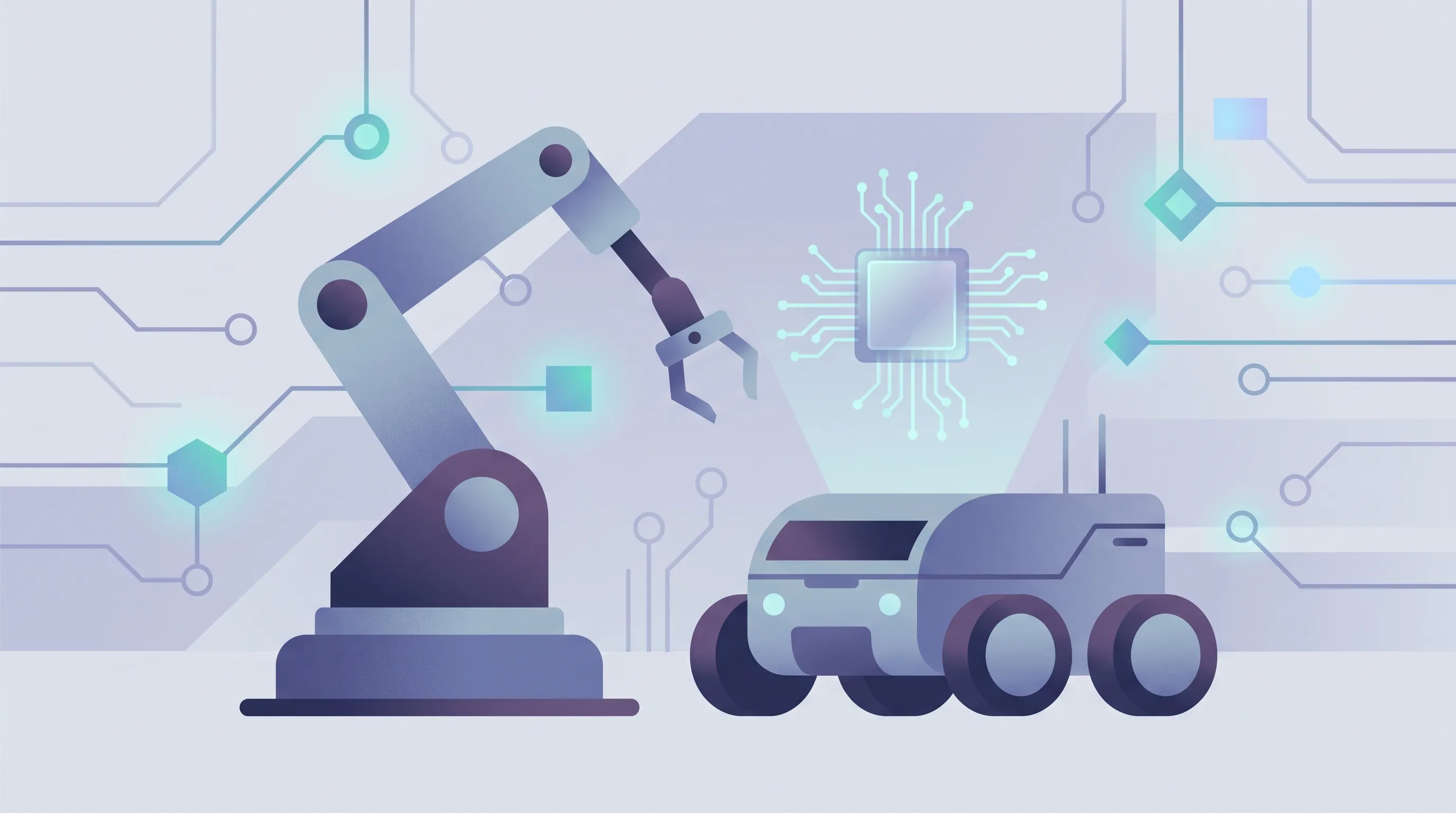
NVIDIA announced the Jetson Thor family on July 15, 2026, unveiling new edge AI computers aimed at mainstream robotics and on-device inference. The company framed the launch as a step to move more agentic workloads off the cloud and into compact, power-efficient systems.
The lineup centers on two new Blackwell‑based modules: the Jetson T3000 and T2000. NVIDIA says the modules combine higher performance per watt with software features that make running multimodal models on-device practical.
NVIDIA’s blog lists the T3000 as delivering roughly 865 FP4 teraflops in a module about half the size and power of the previous T5000, pairing a Blackwell GPU with an eight‑core Neoverse Arm CPU, 32GB of LPDDR5X and roughly 273GB/s of memory bandwidth. That performance aims to let robots run large vision, language and action models locally.
The T2000 is positioned as a wider‑reach, lower‑cost option with about 400 FP4 teraflops and 16GB of memory, designed for visual AI agents, mobile robots and industrial manipulators that need strong inference without the highest memory configurations. NVIDIA says the Thor family spans performance from smaller TOPS devices up to multi‑teraflop edge systems.
Software was a major focus of the announcement. NVIDIA introduced Jetson agent skills — agentic tools that automate memory optimization and system configuration — and said developers can emulate T3000 performance later this month via JetPack 7.2.1 while T3000/T2000 hardware is scheduled to ship in Q1 2027.
To support on‑device reasoning, NVIDIA expanded its Cosmos 3 family with Cosmos 3 Edge, a roughly 4‑billion‑parameter robot foundation model that the company describes as light enough for real‑time vision reasoning and predicting actions on Thor hardware. The company said Cosmos post‑training can close the sim‑to‑real gap for specific robot embodiments.
NVIDIA framed the launch squarely at robotics OEMs and embedded AI developers who want to shift agentic workloads out of the cloud — lower latency, greater privacy and fewer bandwidth costs were cited as key benefits of on‑device inference. The blog noted early interest from industrial and humanoid robotics firms building on the Jetson platform.
The company also emphasized an ecosystem play. A broad set of hardware partners and system integrators are listed as preparing Thor‑based modules and systems, and several software partners will offer emulation and migration tools to ease moves from Orin and earlier Jetson modules to Thor. That ecosystem is central to NVIDIA’s claim of enabling mass deployment.
For robotics engineers, the practical upsides are familiar: lower inference latency, the ability to run multimodal models without round trips to cloud servers, and more headroom for closed‑loop control and perception tasks. Vendors also highlighted that memory optimizations can let some customers drop to smaller memory SKUs without losing capability.
But moving powerful models to constrained hardware brings tradeoffs. Thermal design, power budget, and real‑world sensor integration remain implementation challenges for OEMs, and NVIDIA’s blog acknowledges memory prices and system cost as factors that shaped the T3000 design. Developers will need to validate real‑world performance on their robot embodiments, especially for safety‑critical applications.
NVIDIA also tied Thor into its broader physical AI stack — Jetson software, Isaac robotics tools, Holoscan for sensor processing, and Metropolis for vision — so teams can reuse cloud‑to‑edge workflows and open models like Nemotron and Isaac GR00T for robot behaviors. That continuity is intended to shorten development cycles for complex agentic systems.
Developers can start today using the Jetson AGX Thor developer kit and T3000 emulation; full availability of the T3000 and T2000 modules is slated for Q1 2027. The key near‑term milestones to watch are the JetPack 7.2.1 emulation release, partner module rollouts, and early field reports on real‑world power, thermal and inference performance.