Palantir and NVIDIA Launch Air-Gapped Nemotron Engine
A joint effort to run Nemotron models on-prem for government and critical infrastructure
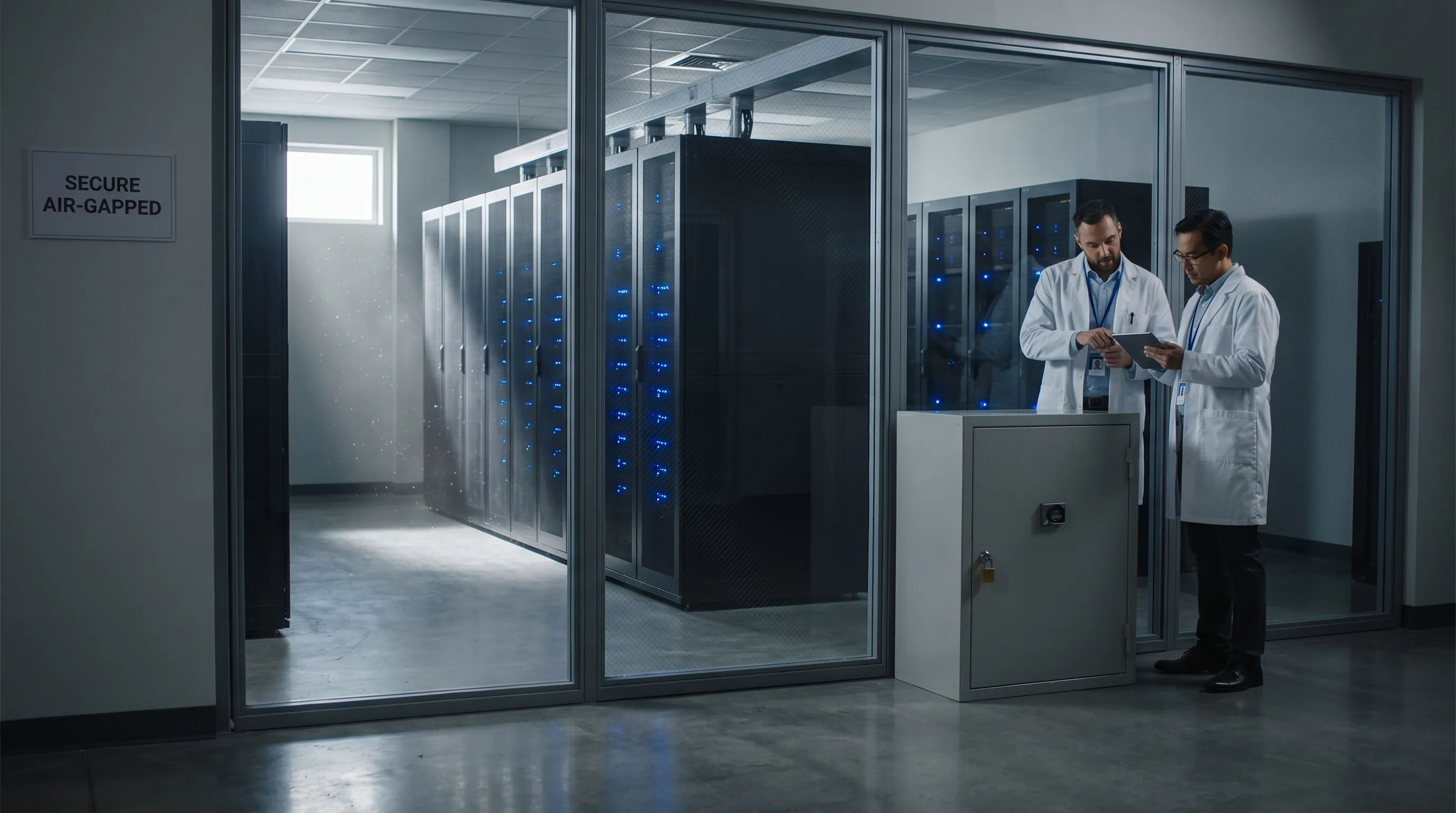
Palantir announced a strategic initiative with NVIDIA to run NVIDIA’s Nemotron open models inside sovereign, classified and air‑gapped environments, targeting U.S. government agencies and critical infrastructure operators.
The new offering bundles NVIDIA compute and Nemotron model families with Palantir’s AIP, Foundry, Ontology and Apollo platforms to provide a single on‑prem engine for training, weight modification and audited deployments without sending sensitive data offsite.
Palantir and NVIDIA say the package is aimed at customers that need “sovereign” control: organizations that must keep data, models and inference entirely inside physically isolated or classified networks.
Technically, the partnership emphasizes air‑gapped topologies — systems physically disconnected from untrusted networks — and on‑prem orchestration so agencies can run Nemotron as a self‑contained AI stack on NVIDIA‑accelerated hardware. Palantir’s Apollo is used to deploy and manage those on‑site instances while AIP provides the model and agent integration layer.
Nemotron is NVIDIA’s family of open models and related tooling; NVIDIA distributes model weights, training recipes and runtime components through its developer portals and open repositories so organizations can host and modify models locally. The Nemotron releases include code, deployment microservices and a permissive open‑model license intended to support enterprise on‑prem use.
On Palantir’s side, AIP acts as the generative AI application layer, Foundry supplies data operations and the Ontology provides the semantic model of the customer’s operational domain, while Apollo orchestrates upgrades and deployment across detached environments. Together those pieces let operators convert data, policies and domain logic into auditable model behavior.
NVIDIA’s packaging for enterprise deployment includes NIM microservices and other runtime components that make Nemotron models available as production services on NVIDIA accelerated servers, which Palantir can surface inside its platform for inference, fine‑tuning and weight patching under local control.
Proponents say the arrangement addresses two common barriers to adopting frontier models in sensitive environments: (1) the need to train and adapt models on classified data, and (2) the requirement for full provenance and audit trails on model changes and outputs. Vendors framed the engine as a way to keep IP, data and model artifacts strictly inside a customer’s perimeter.
The move comes as part of NVIDIA’s broader open‑model strategy, which has seen the company release Nemotron model families, open datasets, and coalition work to accelerate open research across industry partners and academic labs. That program has emphasized providing open weights and toolchains so organizations can run high‑capability models themselves.
Security teams and procurement officers are likely to welcome on‑prem options, but experts caution that air‑gapped deployment does not remove internal risks. Effective governance will still require strict insider controls, hardware supply‑chain vetting and continuous monitoring of model behavior after any weight modifications.
From a market perspective, the announcement tightens ties between two major enterprise AI vendors and signals demand for “sovereign AI” solutions that mix open models with hardened operations tooling, rather than relying solely on hosted cloud services. Observers see it as a play to keep high‑value AI workloads inside national and industrial perimeters.
Palantir and NVIDIA debuted the engine in late June 2026 and said customers can begin working with the integrated stack immediately through Palantir’s deployment channels and NVIDIA’s enterprise software partners, subject to procurement and certification timelines that vary by agency.
If widely adopted, the engine could accelerate regulated customers’ ability to build agentic and domain‑specific AI tools on premises, while raising the bar for internal model governance and auditability in classified and critical‑infrastructure settings. For now, interested organizations are being steered to Palantir and NVIDIA documentation and customer engagements for technical and compliance details.