Retro Biosciences Hits $1.8B Valuation as Alzheimer’s Trial Advances
Sam Altman‑backed startup aims to add 10 healthy years; first human trial shows early safety signals
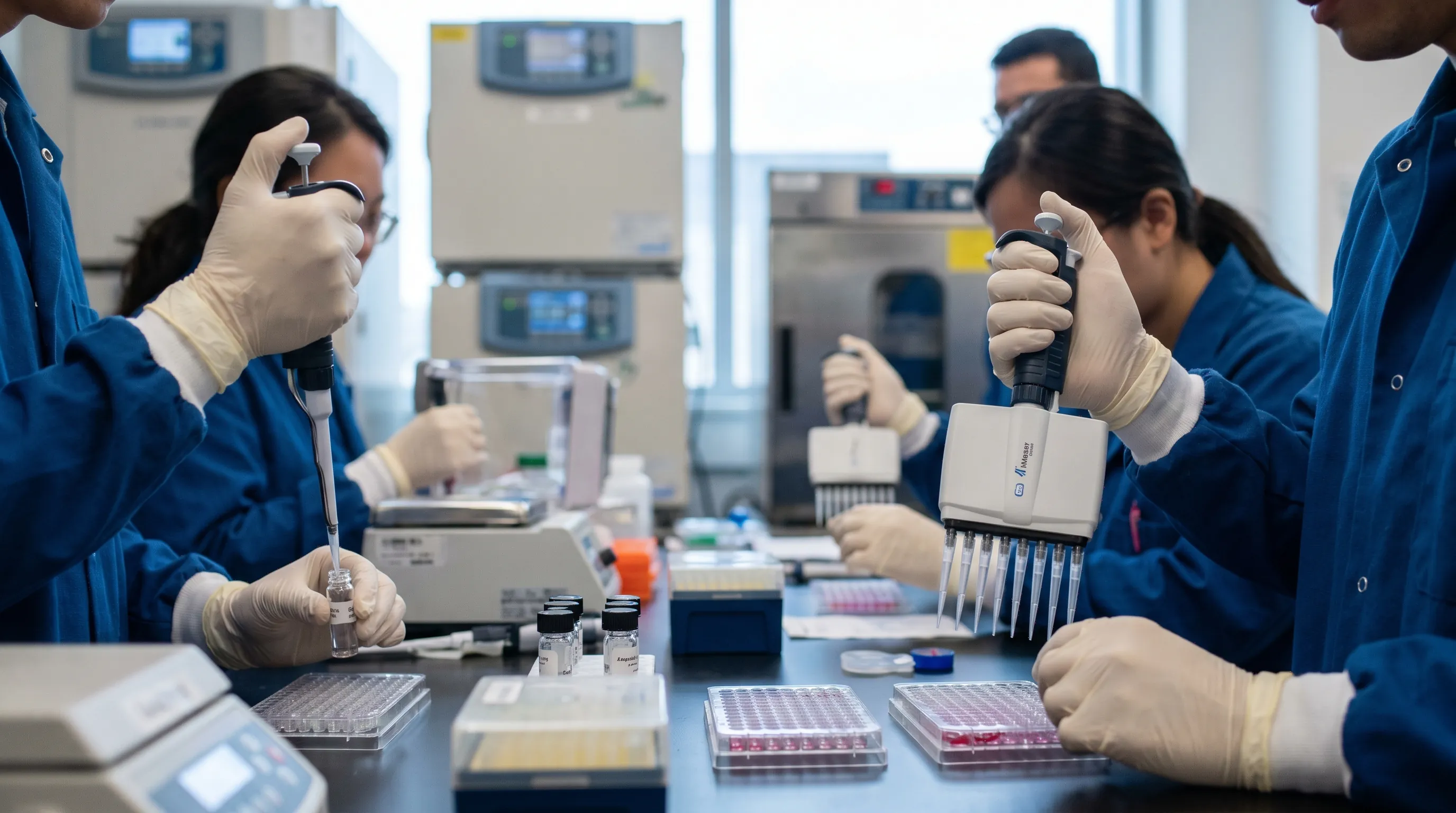
Multiple laboratory workers wearing protective gear use pipettes to dispense liquid samples into vials and multi-well plates. © The GPU Trade Inc 2026
Retro Biosciences, the longevity company backed by OpenAI CEO Sam Altman, announced a new fundraise that values the startup at $1.8 billion. The company confirmed the valuation in an update tied to CEO remarks at STAT’s Breakthrough Summit West in San Francisco on May 22, 2026.
The company’s stated mission is bold but simple: add 10 healthy years to the human lifespan. Retro says it is pursuing multiple approaches — from in vivo gene therapies to cell replacement and other methods meant to rejuvenate aging tissues.
Retro launched out of stealth after a large seed investment from Sam Altman, who put roughly $180 million into the company at its start. The startup later pursued larger fundraising rounds to scale its screening and development capabilities, attracting attention across biotech and tech circles.
The company is already in the clinic with its first human trial. That study tests an oral candidate intended to boost the body’s clearance of protein aggregates — abnormal clumps of protein thought to drive Alzheimer’s disease in many patients. Retro says the candidate aims to improve cellular clean‑up pathways that break down aggregated protein.
At STAT’s Breakthrough Summit West, Retro CEO Joe Betts‑LaCroix told attendees the trial is “going super good” and that investigators have not observed any dose‑limiting toxicities so far. He told the audience the company expects to release some trial data around August 2026.
The company’s path — moving from ambitious mission to early human testing — reflects a trend in longevity biotech where well‑funded startups try to translate lab discoveries into therapies quickly. Retro has publicly described a pipeline that mixes near‑term drug candidates with more experimental programs such as partial cellular reprogramming.
Investors and the public are watching closely because longevity research combines high scientific promise with high technical risk. Many early‑stage findings in animals do not reproduce in humans, and the biology of aging spans multiple tissues and mechanisms. Those realities make any clinical readout important — even preliminary safety and biomarker reports.
The field’s risks are well illustrated by earlier setbacks at other startups. Unity Biotechnology, an early senolytic developer, failed to meet primary endpoints in a phase 2 trial for osteoarthritis, underscoring how promising mouse results can falter in patients. That history has made investors and scientists cautious about interpreting early signals.
Retro’s approach mixes immediate, testable goals with longer‑term platform work. In the near term the company is prioritizing small‑molecule or orally delivered candidates that can enter trials quickly. At the same time it is pursuing gene and cell strategies aimed at more fundamental tissue rejuvenation down the line.
The $1.8 billion valuation follows press reports and investor moves over the past year that suggested large financing rounds for Retro. Earlier reporting in 2025 described plans for a multihundred‑million to $1 billion raise to scale the company’s discovery and translational efforts. That context helps explain the size of the latest valuation update.
Regulators and independent scientists will likely scrutinize Retro’s upcoming data, particularly measures of target engagement, biomarkers of aggregate clearance, and any hints of clinical benefit. For longevity programs more broadly, robust safety data and reproducible biomarker changes will be crucial before claims about extending healthy lifespan can be evaluated.
For now Retro’s announcement is a milestone in a crowded and controversial part of biotech. Its early trial news — if backed by credible August data reporting — could accelerate interest and investment in aging therapies. But any long‑term claim about adding years to healthy human life will require many more trials and independent confirmation.