Saturn Cloud, Mirantis Build Turnkey AI Stack for GPU Clouds
Saturn Cloud adds developer layer to Mirantis k0rdent for full‑stack GPU platforms
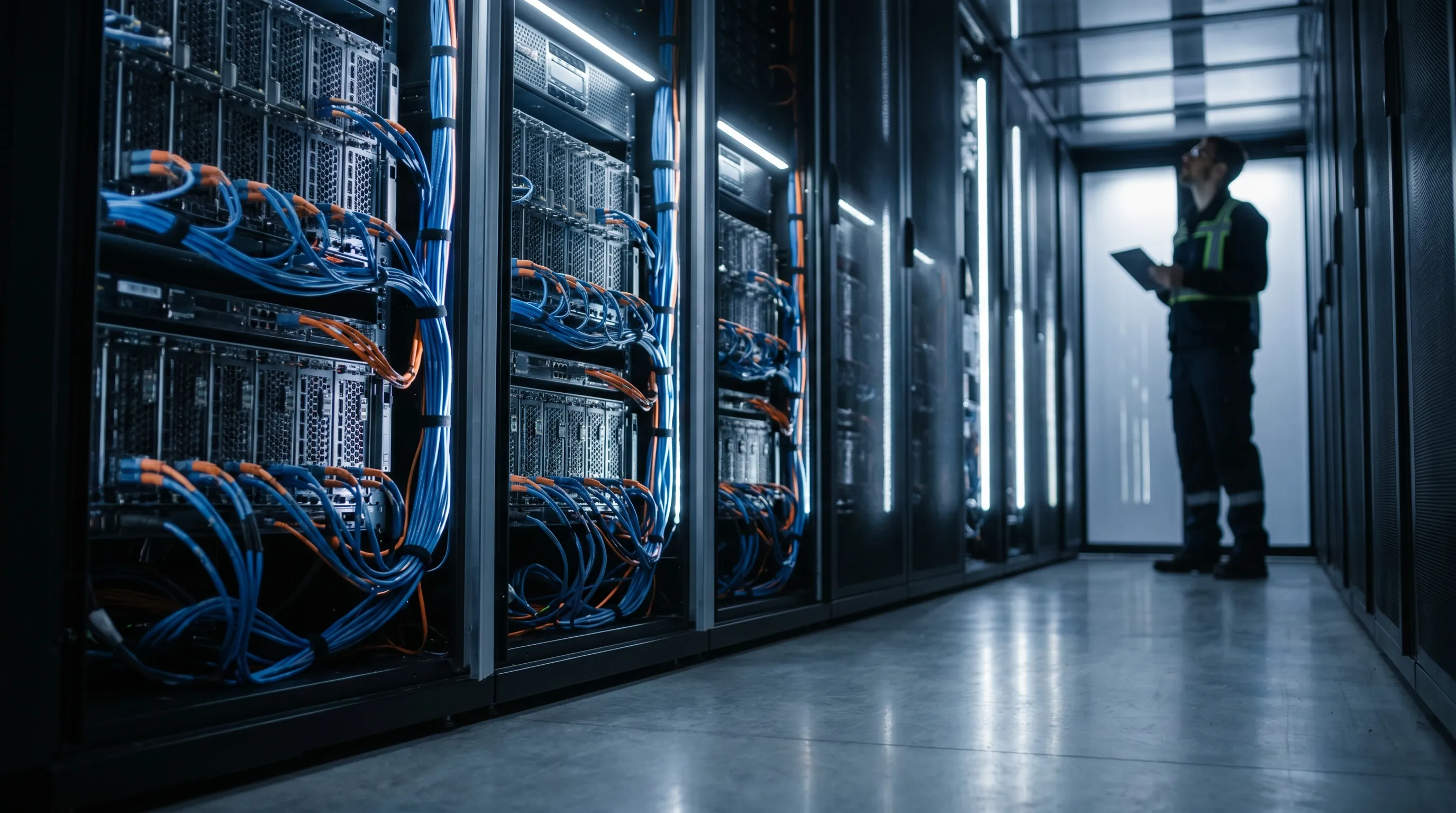
A technician stands in a brightly lit data center aisle while inspecting rows of heavily cabled server racks. © The GPU Trade Inc 2026
Saturn Cloud and Mirantis announced a partnership that links Mirantis’ k0rdent AI infrastructure automation with Saturn Cloud’s developer platform to deliver a turnkey, full‑stack AI offering for GPU clouds, neoclouds, and enterprises.
The combined stack automates bare‑metal provisioning, multi‑tenancy, network isolation, GPU scheduling, observability, and lifecycle management across NVIDIA Grace Blackwell, NVIDIA Blackwell, and NVIDIA Hopper hardware families.
Mirantis positions k0rdent as the infrastructure control plane that converts accelerated computing servers into production‑ready Kubernetes clusters. The company says that automation removes much of the manual engineering previously required to get GPUs into production.
Mirantis has been expanding k0rdent as a composable, Kubernetes‑native management platform that uses declarative automation, GitOps workflows, and validated templates to scale AI infrastructure across clouds and on‑prem environments. Recent Mirantis releases show the product aims to bridge traditional VM and modern container workloads under a single control plane.
Saturn Cloud supplies the application layer: managed developer environments such as Jupyter, RStudio, and VS Code, distributed multi‑GPU training orchestration, one‑click API endpoints, AI agent hosting, and enterprise security controls including SSO, RBAC, and SOC 2. The company says those services run on k0rdent‑managed clusters without requiring users to know Kubernetes.
Together the vendors say the stack gives AI teams a self‑service experience similar to hyperscalers but on infrastructure customers control. That means data can stay on‑premises while teams retain the developer UX of notebooks, remote editors, and API deployment portals.
For GPU providers and neocloud operators the pairing is pitched as a revenue and operations play: k0rdent creates tenant‑isolated clusters with dedicated nodes and isolated networking, while Saturn Cloud layers in billing, usage tracking, and environment templates. The workflow is designed so machines are wiped and returned to a pool when tenants churn, simplifying multi‑tenant operations.
On the technical side, Mirantis automates hardware onboarding using BMC protocols, Metal3, and Cluster API to image and manage bare‑metal servers at scale. Saturn Cloud installs via Helm charts and provides job scheduling, RDMA support, and visibility tools for GPU utilization and idle detection. The partners say the installation path can avoid manual imaging and VLAN configuration.
The integration also taps Mirantis’ work with NVIDIA tooling for AI factories. Mirantis has validated integrations that automate installation of GPU operators, network operators, and GPU schedulers such as NVIDIA Run:ai, which Mirantis says speeds time to production and improves utilization in multi‑tenant setups.
Saturn Cloud says the combined stack is available today on Mirantis k0rdent AI infrastructure and notes the company supports GPU architectures and is used in production by more than 100,000 developers across enterprises, research institutions, and startups. Organizations can contact Mirantis or Saturn Cloud for evaluations.
The partnership reflects a wider industry push to package AI infrastructure as a managed platform rather than a set of discrete components. Vendors from Mirantis to hyperscaler partners are working to reduce the time and tribal knowledge required to sequence drivers, operators, networking, and schedulers into a stable AI environment.
For IT and platform engineers the offering promises faster tenant onboarding and lower operational overhead; for data scientists it promises immediate access to familiar tools and scalable multi‑GPU training without platform work. Still, organizations will need to validate performance, security posture, and cost against their particular workloads before a large‑scale rollout.