SpaceX S-1 Reveals Multi-Billion Compute Deal
IPO filing shows $1.25B/month from Anthropic and a push into terrestrial and orbital AI compute
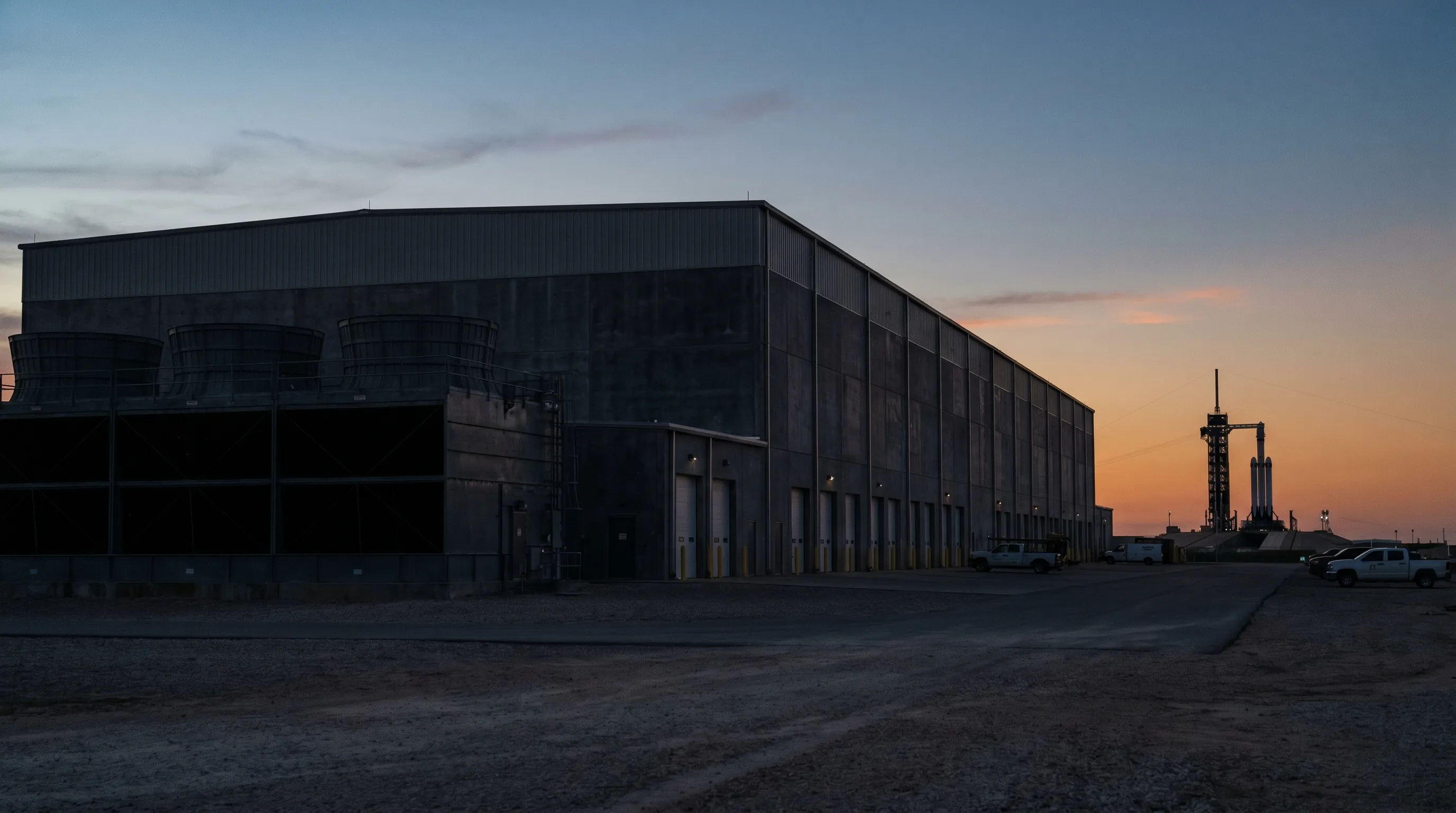
A large industrial building with adjacent cooling towers stands near a silhouetted rocket positioned on a distant launch pad during twilight. © The GPU Trade Inc 2026
SpaceX’s long‑awaited S‑1 registration, filed with the U.S. Securities and Exchange Commission on May 20, 2026, pulled back the curtain on a dramatic strategic shift: the company is pitching itself as an AI infrastructure supplier as well as an aerospace firm.
The most striking commercial disclosure was a customer agreement with Anthropic, which the filing says has committed to pay SpaceX $1.25 billion per month for access to the company’s Colossus data centers through May 2029.
SpaceX describes two large terrestrial clusters, labeled COLOSSUS I and COLOSSUS II, and says those facilities can host high‑power GPU capacity for training and inference workloads. The company framed those centers as core assets that can be leased to external AI labs while supporting its own xAI operations.
The S‑1 makes the case that control of computing, power, networking, and launch logistics is now a source of competitive advantage in AI, not just a supporting cost line. The filing argues that integrated physical systems will decide future model leaders.
SpaceX also folded an ambitious orbital plan into its IPO narrative, describing “orbital AI compute satellites” and sketching a roadmap that, if realized, would extend data‑center functions into low Earth orbit. The filing says the company expects to begin deploying orbital compute satellites as early as 2028.
Company risk language in the S‑1 is explicit: SpaceX warns that orbital compute is early stage, carries technical complexity, and may not prove commercially viable. That admission underscores how speculative, as well as strategic, the space‑based layer remains.
Analysts and industry observers immediately reframed the IPO: what was once a rocket and satellite company now presents itself as a vertically integrated provider of compute, networking and energy for AI workloads. The filing ties Starlink, launch economics, and colocation capacity into a single industrial thesis.
For Anthropic, the deal is both a cost and a capacity solution. Reporting tied to the filing said the contract anchors a rapid capacity ramp — Anthropic plans to expand into Colossus II — and the commitment helps explain why some analysts project improved near‑term profitability for the lab. Those claims appeared in press coverage drawing on regulatory disclosures and company statements.
The commercial scale disclosed is unprecedented in recent AI infrastructure deals: the monthly figure would translate to roughly $15 billion per year if run to term, and reports describe purchases of hundreds of megawatts of GPU power and tens of thousands of accelerators in single sites. The S‑1 and subsequent coverage put the value of the Anthropic agreement in the tens of billions if it runs through 2029.
Investors and competitors will watch a few critical tests: can SpaceX sustain high utilization in Memphis‑area megaclusters, can Starlink and launch economics materially lower the cost of moving and powering huge AI fleets, and can orbital platforms solve latency, thermal, and maintenance challenges at scale. The S‑1 makes clear these are the company’s near‑term questions.
The filing also formalizes internal ties across Musk’s businesses, including references to joint manufacturing and power initiatives and to xAI’s Memphis Colossus facility serving the Grok models and X platform. SpaceX positions those linkages as one way to amortize vast capital outlays.
SpaceX’s repositioning matters for the wider AI infrastructure race because it shows large frontier labs are willing to contract huge amounts of bespoke capacity outside the traditional hyperscalers. The S‑1 reframes launch, satellite networking and data‑center construction as levers in a new industrial competition for compute.