TSMC: HBM4E, CoWoS Now the AI Supply Bottleneck
Advanced HBM and packaging are constraining AI system shipments and shifting base dies to N3
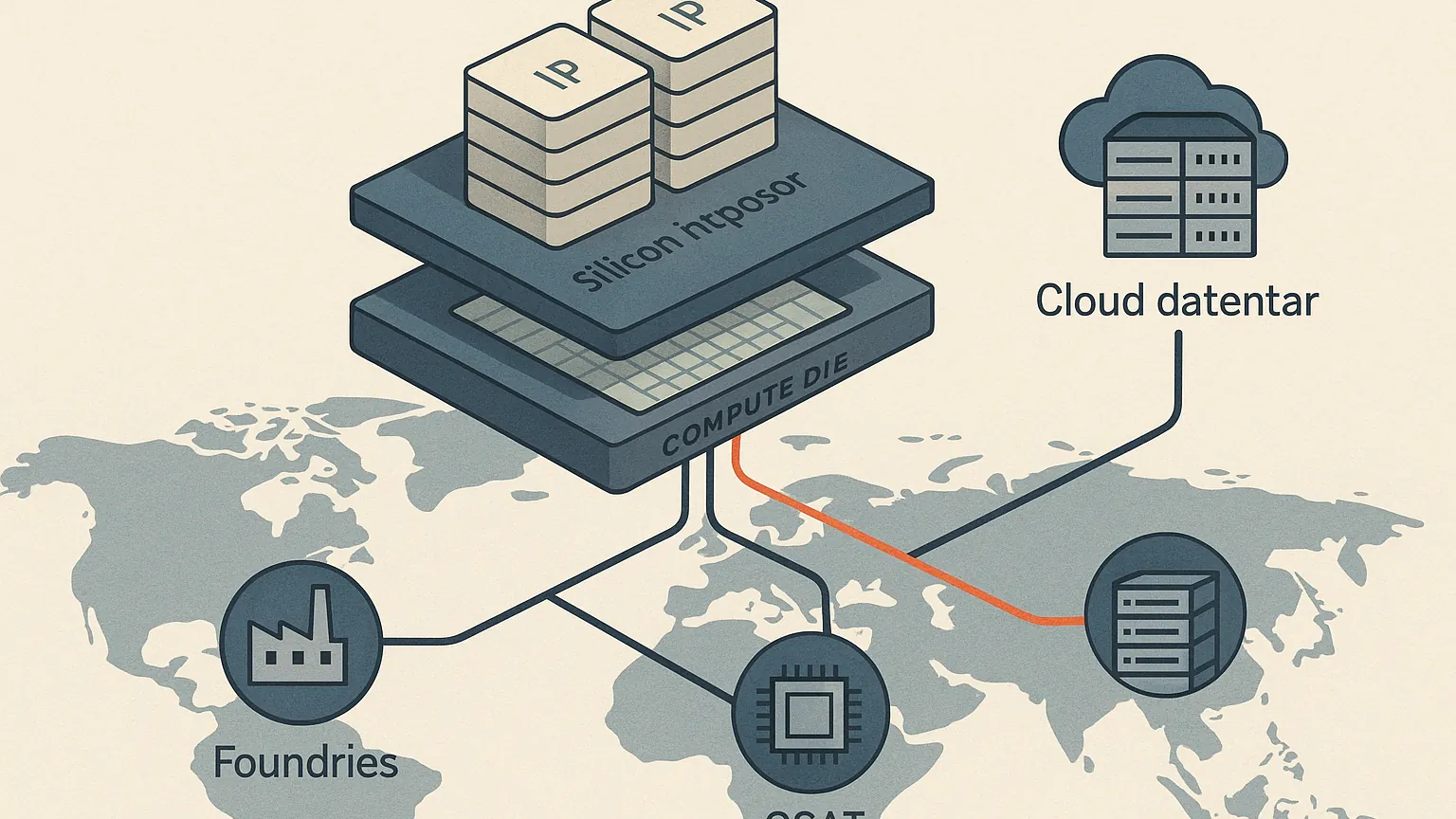
Taiwan Semiconductor Manufacturing Co. (TSMC) and industry analysts are increasingly explicit: the next choke point for AI hardware shipments is advanced High Bandwidth Memory (HBM4E) and the CoWoS packaging pipeline that assembles memory and compute into server modules. TSMC has flagged tight packaging capacity even as wafer demand surges.
TSMC’s stronger revenue guidance and raised capital spending underscore the AI-driven demand that is stressing the supply chain. The company has told investors it expects multiyear AI demand and is boosting capex to add more leading-edge fabs, even while warning of cost pressures from geopolitical events.
Those wafer fabs are not the whole story. CoWoS — Chip‑on‑Wafer‑on‑Substrate — is the advanced back-end packaging process that integrates HBM stacks, logic base dies, and large interposers. Several recent reports say CoWoS capacity is sold out through 2025 and into 2026, making packaging the immediate gating factor for system shipments.
On the memory side, makers are responding by moving some HBM base‑dies onto more advanced foundry nodes such as TSMC’s N3 family. That migration aims to cut power and heat in the logic base die used for HBM4E, but it consumes scarce leading‑edge wafer capacity and shifts cost and allocation dynamics across suppliers.
Market trackers and foundry dashboards show the allocation pressure. Silicon Analysts’ Q1 2026 foundry allocation status lists multiple constrained nodes and notes growing demand for advanced nodes tied to HBM base‑dies, while independent research flags tight N3 and CoWoS availability for AI server builders.
Memory makers are not uniform in their approach. SK hynix and Samsung have publicly invested to move HBM base die or supporting logic to advanced processes to improve performance and yield, while other suppliers have taken different timetables or design choices. Those differences shape who can supply HBM4E at scale and when.
The knock‑on effect hits GPU and AI accelerator makers. Firms that build high‑memory modules need CoWoS slots and compatible HBM stacks; when packaging is constrained, completed GPUs sit waiting for memory modules or assembly, delaying shipments even when wafers are available. Analysts say this can distort unit forecasts for late‑2025 into 2026.
Some vendors are already adjusting product plans. Reported strategies include redesigning packages to use fewer or different HBM stacks, reprioritizing high‑end SKUs for hyperscaler customers, and accepting higher per‑unit cost to win scarce CoWoS slots. Those choices trade margin, performance, and customer mix.
For memory companies the migration to foundry nodes like N3 creates capital and margin pressure. Moving a base die to N3 raises wafer cost and ties DRAM roadmaps to foundry allocation cycles, forcing coordination between DRAM fabs, foundries, and OSAT packagers. That coordination is new for parts of the industry accustomed to producing DRAM in-house.
Hyperscalers and large cloud builders are already locking allocations. Multiple reports show hyperscalers securing multi‑year commitments for top‑tier HBM as they prepare infrastructure for large models, leaving less incremental supply for traditional OEMs and broader markets. That concentration amplifies the downstream pain for mid‑market customers.
What happens next depends on three linked ramps: wafer capacity at advanced nodes, OSAT and CoWoS packaging throughput, and how quickly memory makers convert designs to foundry‑based base dies. TSMC’s capex and packaging expansions will help, but industry trackers still expect tightness into 2026 and caution it could push premium HBM configurations into 2027 timelines.