TSMC posts record Q2 profit, raises 2026 capex on AI demand
AI-driven orders lift results; capex guidance moved toward $60–64B as U.S. expansion is paced by demand
Taiwan Semiconductor Manufacturing Co. reported a record second-quarter profit as demand for AI chips pushed sales and margins higher, and management said it is boosting its 2026 capital spending plan to support a multi-year buildout.
The company posted a roughly 77% year‑over‑year jump in April‑to‑June net income to T$706.6 billion (about $22 billion), beating market forecasts and marking another quarterly record for the world’s largest contract chipmaker.
Revenue for the quarter also hit new highs as orders for advanced logic wafers and advanced packaging accelerated; company commentary and the earnings transcript put second‑quarter revenue near the high end of guidance.
TSMC’s board and management moved to lift 2026 capital expenditure guidance toward a new range of about $60 billion to $64 billion, up from the prior $52–56 billion projection, saying the higher budget is needed to expand capacity for leading‑edge logic and packaging.
Executives said the spending bump is driven by unusually strong, sustained orders for AI‑related logic processes and for advanced packaging such as CoWoS and 3D‑IC, where capacity constraints are becoming a bottleneck for some customers.
Management emphasized that much of the incremental capex will be allocated to 2‑nanometer and below logic fabs and to additional advanced packaging plants, reflecting customers’ push to scale larger, multi‑die AI accelerators.
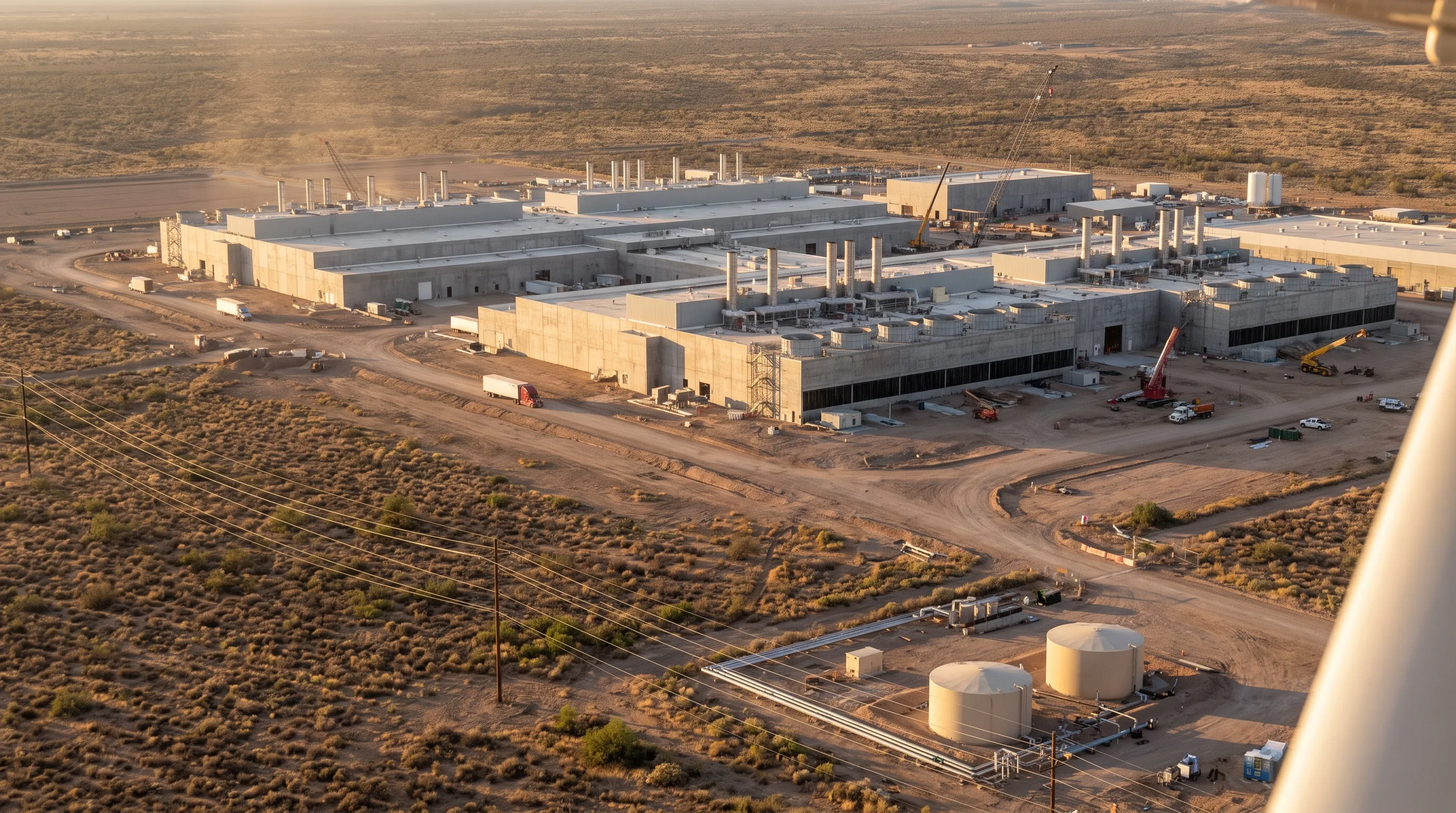
Alongside the capex upgrade, TSMC announced a further commitment of roughly $100 billion of planned investment in its Arizona campus to expand wafer fab and packaging capacity in the United States, adding to earlier announced U.S. pledges.
Company leaders said they did not attach a fixed timetable to the new Arizona commitment, and that the pace of follow‑on construction will be set by customer demand and by approvals and site‑by‑site permitting steps. That makes incremental U.S. spending conditional rather than immediate.
TSMC’s CFO gave third‑quarter revenue guidance that implies continued sequential growth, but also warned that margins will face pressure during an “extreme” production ramp as new nodes and packaging capacity are brought online. Analysts noted the margin tradeoff is consistent with heavy near‑term investment to lock in longer‑term supply.
For customers such as large AI accelerator makers, on‑site U.S. packaging and wafer capacity could shorten supply chains and reduce cross‑border logistics, but it also raises questions about cost and cluster effects as suppliers and utilities follow the fabs. Industry observers said advanced packaging capacity, not wafers alone, is increasingly the binding constraint.
Investors reacted mixedly: markets noted the beat on quarterly profit but also weighed the heavier capex plan and the long‑lead‑time nature of fab builds, which can pressure free cash flow in coming years even as they secure revenue for the decade ahead. Several outlets flagged the company’s upgraded revenue growth outlook for 2026 in dollar terms as evidence of durable AI demand.
TSMC framed the moves as necessary to serve a structural shift toward “agentic” and large‑scale AI infrastructure needs, while saying capital will be deployed in phases and guided by customer commitments, regulatory and site approvals, and the company’s internal project pacing decisions.