TSMC widens AI‑chip lead as HBM and CoWoS squeeze supply
Surging AI demand tightens CoWoS packaging and HBM wafers, reshaping GPU and server timetables
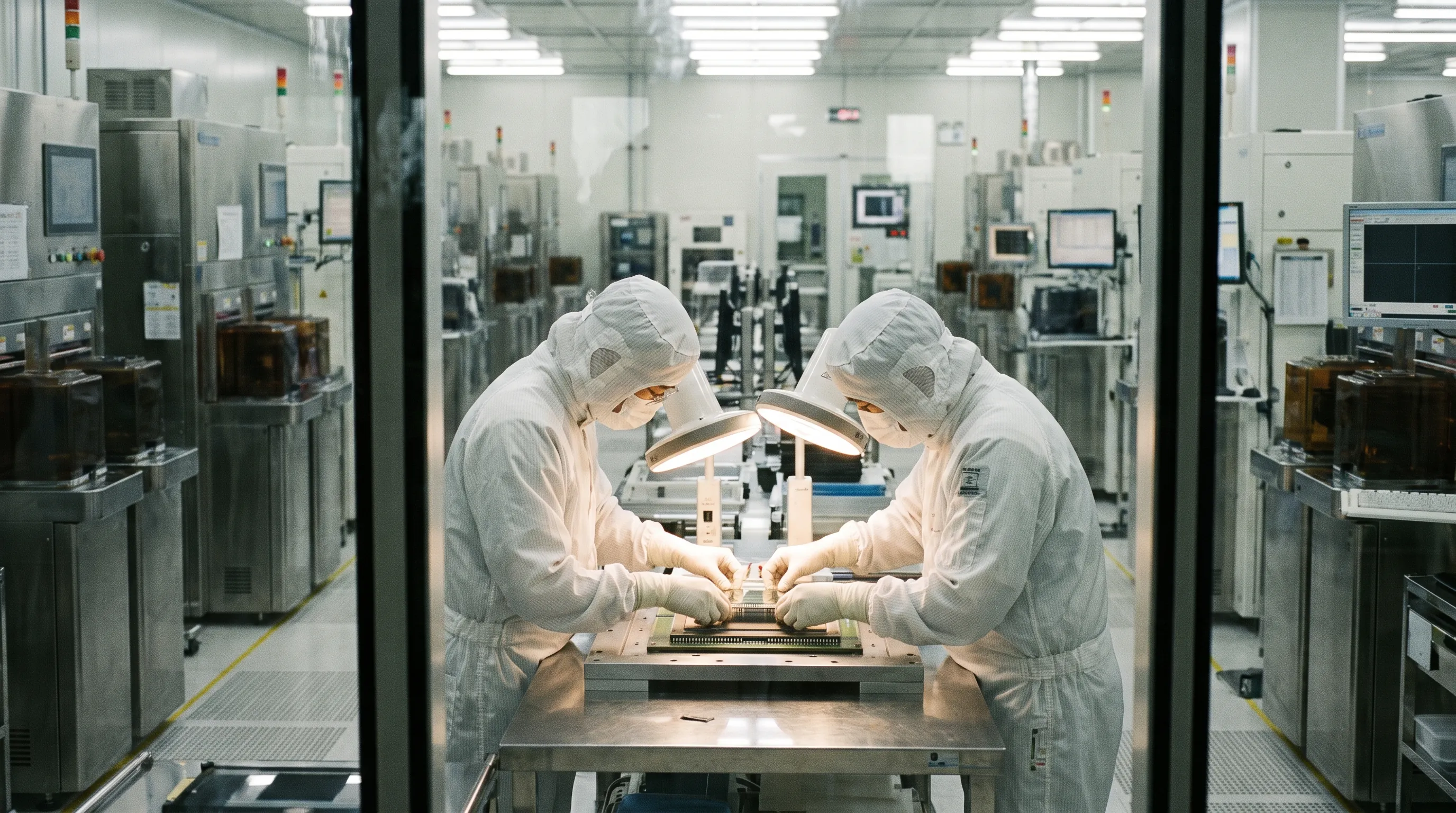
Taiwan Semiconductor Manufacturing Company (TSMC) told investors this week that surging demand for AI accelerators is stretching advanced packaging and HBM memory supply, deepening the company's role as the single largest bottleneck in the AI chip supply chain.
The immediate pinch is in CoWoS — TSMC's Chip‑on‑Wafer‑on‑Substrate process — which customers use to bond large GPU dies to stacks of high‑bandwidth memory (HBM). Company comments and market trackers show CoWoS capacity is “extremely tight” and booked far into 2026 and beyond.
TSMC said the packaging shortfall is serious enough that it plans major capacity builds, including an expanded Arizona program and more advanced‑packaging lines in Taiwan, to relieve pressure over the coming years. The company signaled fresh U.S. investment that will add advanced packaging facilities as part of the plan.
HBM wafer allocation is the other constraint. Leading memory makers have already committed most near‑term HBM output through long‑term deals with hyperscalers and accelerator OEMs, leaving little spare supply for spot demand from GPU, ASIC and server vendors. Industry reporting places HBM availability as a binding limit for many designs.
The timing matters: packaging and HBM are back‑end steps that come after wafer fabrication, so even if TSMC and others can add wafer capacity quickly, the package assembly and memory stacks still need months to scale. Analysts expect allocation effects to ripple into vendor shipment timetables through the second half of 2026 and into 2027.
That mismatch is already visible in the market: some datacenter GPU launches are seeing lead times and shipping windows pushed back, and design teams are reworking form factors to use fewer HBM stacks or alternative packaging options where possible. The result is a short‑term premium on systems that require the largest HBM capacities.
Customers and competitors are responding. Some AI accelerator designers are exploring Intel's EMIB and other heterogeneous packaging routes to reduce dependence on CoWoS, while OSATs and substrate suppliers are racing to add capacity to TSMC's ecosystem. Those shifts take investment and qualification time, so they are not an immediate fix.
Memory makers are also accelerating capital programs. Micron, Samsung and SK Hynix have public roadmaps and factory projects intended to boost HBM supply in 2027–2028, but those ramps will only gradually loosen allocation pressure in the short term. Market estimates still show a supply gap for the highest‑bandwidth modules this year and next.
TSMC’s investment choices underline how advanced packaging can be a strategic moat. By growing CoWoS and related 2.5D/3D lines, TSMC both secures a choke point advantage for customers that need those services and forces competitors to match its backend scale if they want to contest the top end of AI accelerators. That dynamic is reshaping where cloud and AI OEMs place production bets.
Operationally, the bottleneck also exposes new pain points beyond raw capacity: test equipment, substrate supply and yield on multi‑die assemblies are becoming gating factors that lengthen assembly lead times. Some OSATs report high equipment procurement and installation needs to meet CoWoS‑level quality and throughput.
For datacenter customers the takeaway is practical: expect uneven availability across GPU SKUs and staggered delivery windows through H2 2026, with premium pricing likely on the most HBM‑dense modules. Server OEMs and integrators will need to bake longer lead times and alternative configurations into procurement plans.
Longer term, the market is responding with a buildout across layers of the stack — wafer fabs, HBM fabs and advanced packaging units — but those projects take years. In the near term, TSMC’s expanded capex and the memory makers’ factory plans will ease but not erase the bottleneck, prolonging a window in which packaging and HBM determine who can ship the fastest AI systems.