U.S. Grants H200 Export Licenses to 10 Chinese Firms
Licenses approved May 14, 2026 — but no H200 shipments have left for China yet
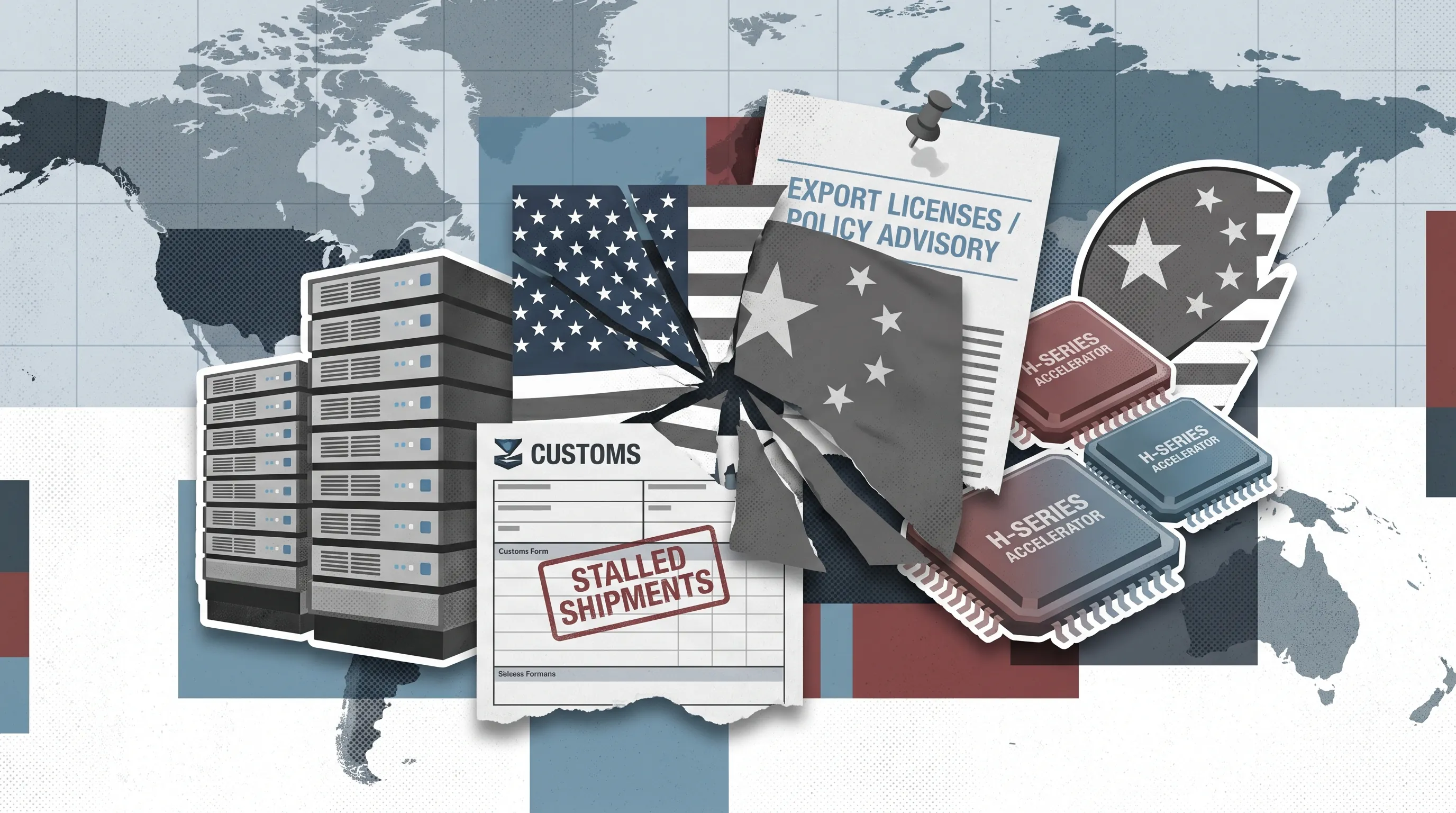
U.S. officials have approved export licenses allowing Nvidia to sell its H200 AI accelerators to roughly 10 Chinese companies, a major loosening of limits on advanced GPU exports announced around May 14, 2026.
The approvals cover a select group of large Chinese cloud and internet firms, with media reports naming companies such as Alibaba, Tencent, ByteDance and JD.com among those cleared to receive the chips.
Despite U.S. permission, multiple sources say not a single H200 shipment has been completed to China because Beijing has not yet cleared many of the imports and logistical hurdles remain.
The H200 is Nvidia’s follow-up to its widely used H100 accelerator and is designed for large-scale model training and inference in hyperscale data centers, making it strategically important to cloud providers and AI labs seeking capacity. Nvidia has said it was restarting H200 production for China after securing U.S. licenses earlier in 2026.
Permission from Washington appears to be conditional and limited: reporting has said individual approved buyers could be capped in how many units they may buy, and some orders may be routed through approved resellers rather than direct corporate sales. Media accounts have cited possible per-buyer limits discussed during licensing.
Beijing’s apparent hesitation reflects a competing priority: Chinese authorities have tightened controls on imports of advanced foreign AI hardware to protect and accelerate domestic chipmakers, and regulators have been slow to sign off on some H200 deliveries. U.S. officials have publicly noted China’s blocking of some imports.
The split between U.S. export approval and Chinese import clearance has left a high-value trade in limbo and underscores how bilateral tech policy can stall even when one side grants permission. That friction affects hyperscalers that planned to scale large-language-model training in China and firms in Nvidia’s supply chain.
Industry reporting says approved Chinese buyers could each be allowed to order tens of thousands of H200 units under the U.S. licensing framework, a scale that would represent significant revenue for Nvidia if the sales proceed. Earlier market briefs have put potential orders into the hundreds of thousands across buyers.
Nvidia’s position is delicate: the company has argued for the commercial case to resume H200 sales to vetted Chinese customers, while U.S. policymakers balance economic interests against national-security concerns over advanced AI tooling moving to hostile or strategically sensitive users. The May approvals mark the most notable reopening since 2022 export restrictions tightened.
Market reaction was immediate: reports of the U.S. clearances helped lift investor hopes that Nvidia could regain China revenue, though analysts caution that the ultimate business impact depends on Beijing’s export-control and customs decisions and on Nvidia’s ability to ship at scale.
For now the central watch points are concrete: whether Chinese regulators formally approve the pending imports, how many units actually clear customs, and whether logistics — from freight to reseller approvals — enable deliveries in the coming weeks. Until those steps happen, approved licenses will remain permissions on paper with major commercial and geopolitical stakes.