Vertex, Gemini: release notes and deprecations
Recent Vertex AI and Gemini changelogs add GA image models, API changes and endpoint shutdown dates
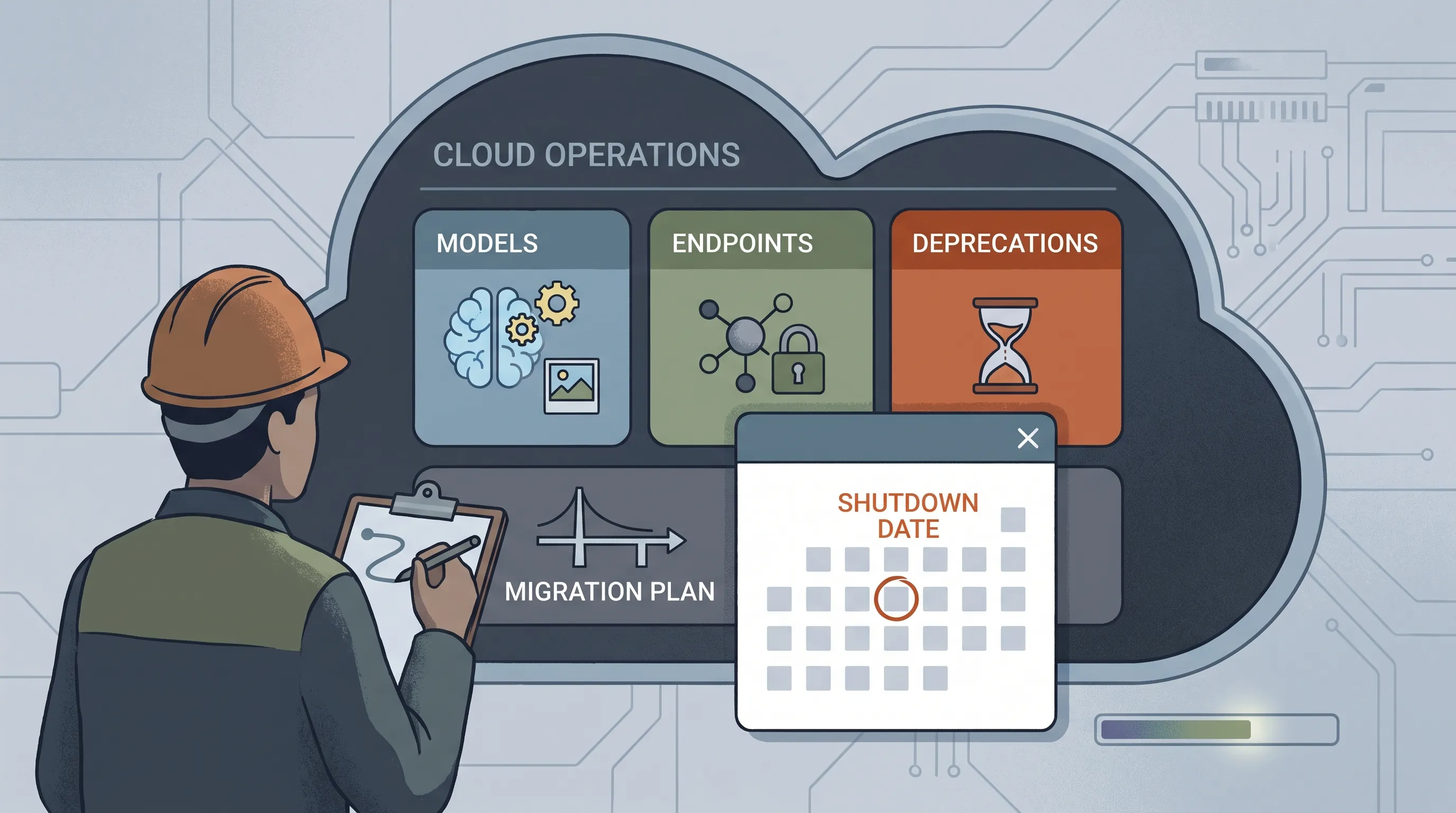
Google Cloud updated both the Vertex AI release notes and the Gemini API changelog this week with a cluster of model promotions, new GA image models and several deprecation notices that matter to production teams.
On the Gemini side, Google announced new generally available visual models — including gemini-3.1-flash-image and gemini-3-pro-image — and flagged the corresponding preview endpoints for shutdown on short timelines. These image-model changes include a video-to-image feature for gemini-3.1-flash-image.
The Gemini changelog also lists a mid‑June notice that Imagen 4 and older Gemini image models are being deprecated and scheduled for shutdown on August 17, 2026. That deprecation affects any services still calling imagen-4.0-generate-001, imagen-4.0-ultra-generate-001 or imagen-4.0-fast-generate-001.
Vertex AI’s platform release notes reinforce the same theme: Google is promoting GA model endpoints while retiring preview endpoints and urging customers to migrate provisioned throughput or preview-specific endpoints to GA equivalents. Those platform notes include guidance on migrating PT purchases and endpoint names to avoid service interruption.
For teams running production LLM and vision endpoints, the practical impact is immediate. Model name changes, endpoint shutdowns, and different GA pricing or rate limits mean you must update deployment scripts, CI/CD flows and monitoring hooks before the listed shutoff dates to avoid failures.
The Gemini changelog also recorded a breaking-schema change to the Interactions API: the request/response schema (`outputs` → `steps`) and response_format configuration were modified, with the new schema becoming the default on May 26, 2026 and the legacy schema removed on June 8, 2026. That kind of API-level switch can silently break clients that assume the older structure.
Vertex’s release notes contain partner model deprecation timelines as well: for example, Anthropic’s Claude 3.5 Haiku was marked deprecated on January 5, 2026 and scheduled for shutdown on July 5, 2026. Customers using partner-hosted models on Vertex need to track both Google’s and partner timelines.
The releases include operational details you should harvest programmatically. The changelogs list exact endpoint IDs, preview names and shutdown dates — data that operations teams can feed into inventory checks and automated migration playbooks. Treat the published model IDs as authoritative keys when updating IaC or traffic routing.
There are also performance and pricing cues baked into the notes. Past entries show GA promotions often come with new pricing rules, adjusted token accounting, and different provisioning behaviors for throughput or reservation purchases. That means migrations can change both latency and monthly bill.
Developers should also scan the Gemini changelog for new SDKs and tooling updates described alongside model changes — for instance, recent Java SDK preview and File Search improvements for multimodal grounding. Updated SDKs and tooling often accompany schema and platform changes, and they can simplify migration when used early.
A short checklist for teams: (1) inventory endpoints and preview model names in use, (2) compare those names with the Gemini and Vertex deprecation tables, (3) schedule migrations to GA endpoints and update any provisioned throughput, and (4) validate client code against the new Interactions API schema and SDK versions. Doing this before each published shutdown date reduces emergency rollbacks.
Finally, treat release notes as part of your SLO/incident playbook. Subscribe to the official Vertex AI and Gemini changelog feeds, scan for keywords like “deprecated”, “shut down”, and “breaking change”, and automate alerts for any model IDs that match your inventory. The recent batch of GA image releases and shutdown dates is a reminder that cloud AI endpoints evolve rapidly and require continuous ops attention.