Why peak water matters for data‑center reporting
Caltech review: dozens of state bills omit peak water metrics that show local strain
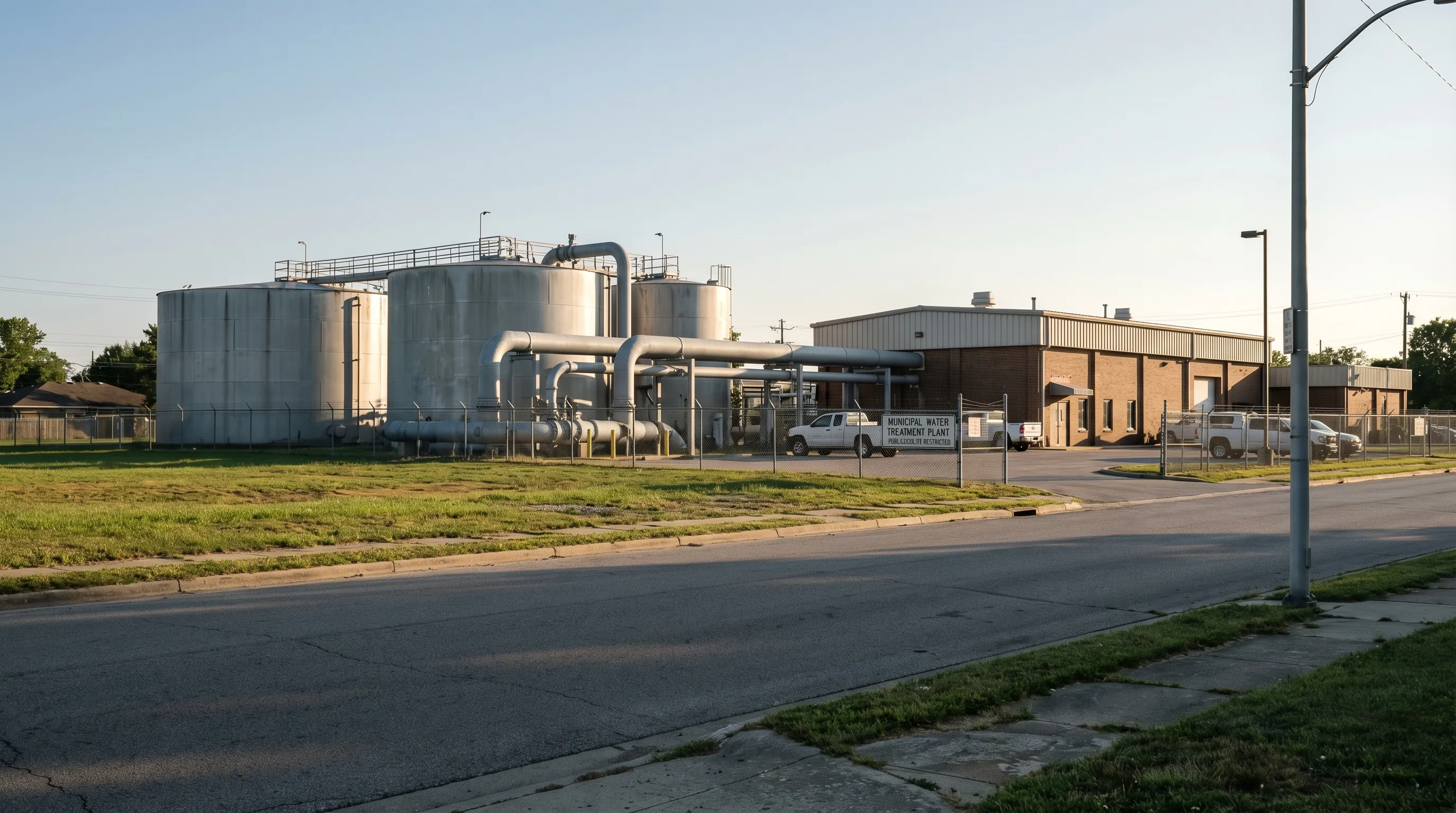
Large cylindrical storage tanks and extensive above-ground piping are visible behind a chain-link fence at a municipal water treatment plant. © The GPU Trade Inc 2026
Communities and utilities are increasingly asking how the surge of AI and cloud infrastructure will affect local water and power systems. The Caltech LCSSP noted that more than a dozen state legislatures are considering laws that would require data centers to report their energy and water use — but the measures vary widely in what they ask for.
That patchwork matters because not all reporting captures the same risks. Some bills focus on annual totals, others on sources of supply or whether water is reclaimed, and only a minority require metrics tied to short‑term strain on systems. LCSSP’s review found this variation could leave communities without the data they need to judge infrastructure impacts.
New Caltech‑linked research makes clear what’s missing: data centers’ water demand is highly “spiky.” The arXiv paper Small Bottle, Big Pipe — co‑authored by Adam Wierman and collaborators — shows peak daily water withdrawal can be three to eight times a facility’s annual average, and in some cases more than ten times.
That spikiness changes the planning problem. The paper argues annual volumes — the “small bottle” — can look modest while the real constraint is the “big pipe” of peak capacity that public water systems must deliver on hottest days. Infrastructure is engineered for maximum demand; annual totals can therefore mask costly short‑term upgrades.
The magnitude of the issue is large. The researchers estimate that, if 2024 water‑use intensities persist, U.S. data centers could require roughly 697–1,451 million gallons per day of new peak water capacity by 2030, with national upgrade costs in the range of about $10 billion to $58 billion under different growth scenarios. Those estimates underline why peak metrics matter for municipal planners.
Concerns about water stress at data‑center sites are not new. A 2021 Environmental Research Letters analysis — widely cited in the field — found roughly one‑fifth of server locations draw from watersheds that are moderately to highly water stressed, reinforcing that siting decisions and reporting should account for local supply limits.
Yet LCSSP’s early‑2026 scan of state bills shows more than half of proposals introduced in the first months of the year do not require reporting of peak or maximum daily water demand. That gap creates a mismatch between what lawmakers are mandating firms to report and what local decision‑makers need to assess system compatibility.
The policy stakes are practical and immediate. Utilities and municipalities decide whether to approve new permits, require developers to fund upgrades, or deny projects because existing pipes and treatment plants cannot meet summertime peaks. Without peak‑demand data, those choices are being made with partial information.
Designing effective reporting regimes means starting from the decisions that local governments make. LCSSP recommends that metrics be tailored to decision‑relevant questions — chief among them maximum daily or hourly withdrawal rates, timing of peaks, and the mix of water sources (potable, reclaimed, or third‑party supplies). Those measures let planners compare proposed demand against system capacity and drought risk.
There are also operational solutions to reduce the tension between water and power peaks. The arXiv paper and related reporting suggest coordinated water‑power planning, cooling flexibility (switching between water‑based and dry cooling), and “water‑capacity neutral” approaches where operators offset their peak demand with investments in local infrastructure. Policymakers can bake incentives for these practices into reporting and permitting frameworks.
For these ideas to move from research to rulemaking, scientists and technical experts must proactively translate findings into usable policy tools. LCSSP says it will publish model legislation, auditing benchmarks, and community evaluation tools that align reporting with local planning needs — a step toward preventing transparency from becoming a box‑checking exercise.
If state legislators want reporting to empower communities, they should require peak‑demand metrics, standardized calculation methods, and audited disclosures that local planners can use in capacity and resilience assessments. Doing so keeps the focus on real infrastructure impacts rather than only annual accounting, and it gives communities leverage to negotiate protections and investments when projects move forward.