Windows 11 June update adds NPU diagnostics
Task Manager gains NPU columns and memory telemetry as on‑device AI spreads
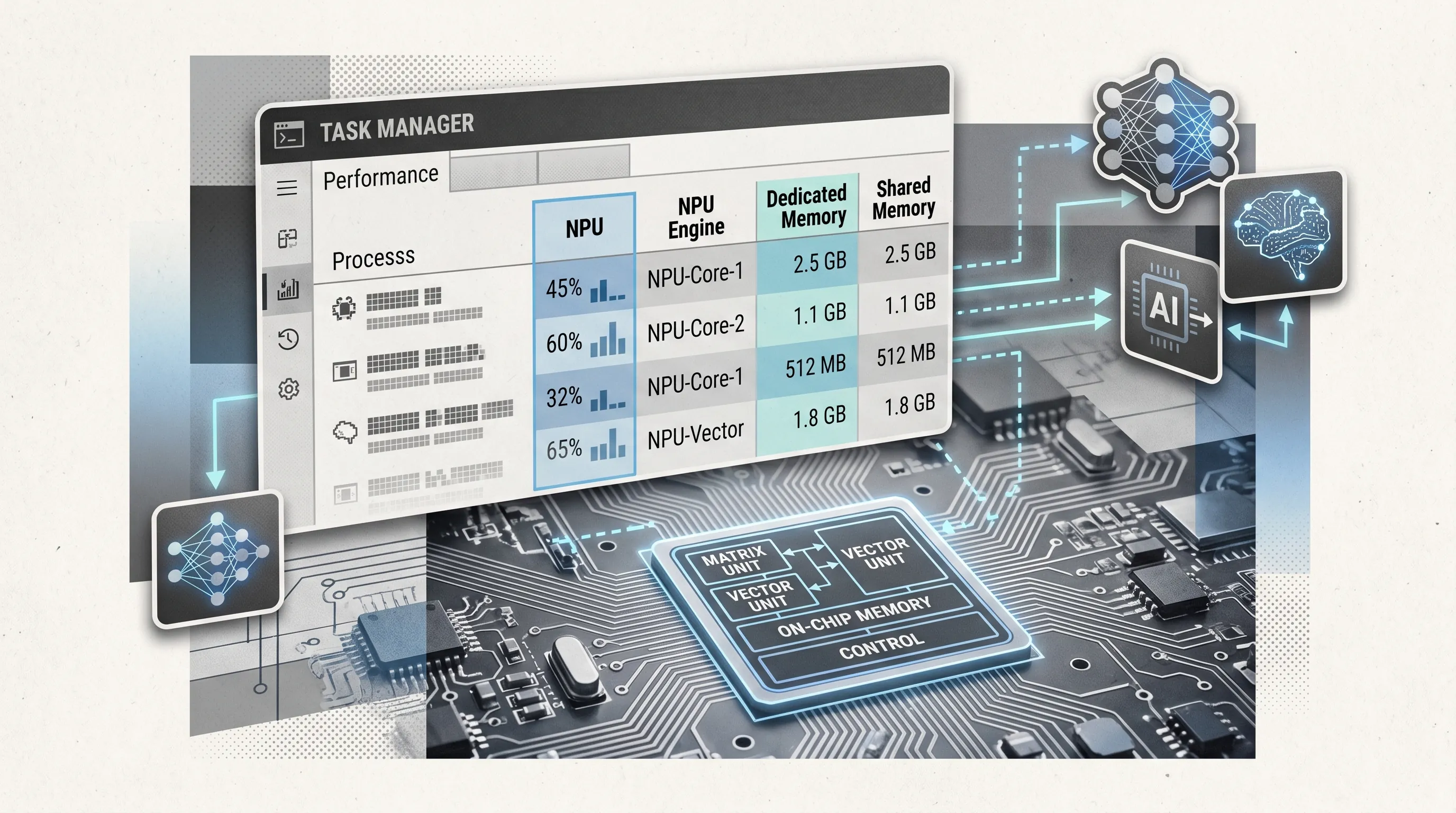
Microsoft’s June 2026 Windows 11 update brings new NPU (neural processing unit) diagnostics to the desktop, adding optional Task Manager columns and device telemetry that expose on‑chip AI activity. The rollout notes tied to the preview and the early June release describe the new fields and where they appear in the UI.
On PCs that include an NPU, Task Manager will offer optional columns named NPU (utilization), NPU Engine (active engine), and NPU Dedicated Memory and NPU Shared Memory. Those columns are available on the Processes, Users and Details pages, and the Performance page now shows neural engines alongside GPU telemetry.
The changes began appearing in Microsoft’s May preview (KB5089573) and are staged for the June 2026 security update rollout. Microsoft has used the preview channel and controlled feature rollouts to make the features visible to some systems first, then widen availability.
Microsoft’s Insider and release notes spell out where admins and users can enable the fields: right‑click any column header in Task Manager and add the new NPU columns, or view NPU activity on the Performance page for a system with a supported AI accelerator. The official release notes for the preview builds document those exact steps.
For developers and IT administrators the value is straightforward: the new telemetry shows which processes are using the NPU, whether the on‑chip engine is active, and how much dedicated versus shared NPU memory a process consumes. That makes it easier to spot where local AI inference is running and to triage performance or compatibility issues.
The timing matters because NPUs are no longer experimental hardware. Chipmakers and OEMs have been shipping AI accelerators in mainstream PCs for two years, and Microsoft’s developer communications now point to an ecosystem where local AI workloads are first‑class system tenants. The company’s developer blog and partner messaging have repeatedly highlighted support for AI silicon across vendors.
On the face of it the Task Manager tweak is small. But it signals a broader shift: operating systems are beginning to bake hardware AI telemetry into client tools the same way they surface CPU and GPU use. Visibility at that level helps developers optimize models, lets IT teams spot runaway inference workloads, and gives security teams another signal to monitor.
Microsoft is rolling these changes out gradually, which matters for admins planning deployments. The preview KB is optional and has shown up first in Release Preview and Insider channels, while the full Patch Tuesday release is being staged more widely in June; organizations should test on pilot devices before broad rollout. The Microsoft Q&A and release pages include notes about the phased delivery and known issues associated with the preview.
Privacy and telemetry are still front‑of‑mind. The update exposes on‑device resource use but does not change how Microsoft collects or transmits diagnostic data by default. Still, enterprises that manage telemetry and diagnostic policies will want to review their settings so NPU usage counters appear in the right management logs and do not conflict with internal privacy rules. Microsoft has published guidance on transparency and consent for device telemetry that administrators should consult.
Practically, enabling the columns is a quick, non‑destructive change: users and admins can add the NPU columns only on machines that report an NPU, and the fields are optional in Task Manager. That makes the feature useful for targeted troubleshooting without affecting systems that lack AI accelerators. Rollout timing will determine how quickly the telemetry becomes a routine troubleshooting tool.
Expect more of this work from OS vendors. As local inference grows, operating systems, management consoles and observability tools will need to surface AI‑accelerator health and usage the way they already do CPU, GPU and memory. The June 2026 update to Windows 11 is modest but indicative: hardware AI is shifting from niche to platform‑level telemetry.